

A History of Marketing / Episode 49
Have you ever stood in front of a 500-year-old painting of a father devouring his son and asked yourself, “Who paid for this?” Me neither. Until I met Peter Van Wijnaerde.
Peter is a CMO based in Ghent, Belgium, and the writer behind a Substack that connects art history to modern marketing.
Rory Sutherland recommended I speak with Peter (which is as high a compliment as you can get in this field) after seeing his presentation on medieval branding.
Peter’s premise is provocative: art was the original marketing department.
Patrons funded paintings, statues, and tapestries not for beauty’s sake, but because they needed to project power, build legitimacy, and sway public opinion. The separation of fine art and commerce is a relatively recent development.
Peter brings a perspective that’s part art aficionado, hobbyist historian, and marketing strategist. He shows us that “stopping power” has been central to persuading the masses for a thousand years.
Here is my conversation with Peter Van Wijnaerde.
Listen to the podcast: Spotify / Apple Podcasts
Quick Update: Thank you to the thousands of marketers from around the world who have played The CMO Game! It’s been amazing to see the response and I’ve had a few marketing professors reach out to request using it in their classes.
Special Thanks to Xiaoying Feng, a Marketing Ph.D. Candidate at Syracuse, for reviewing and editing transcripts for accuracy and clarity. And thank you to Rory Sutherland for introducing me to Peter.
The Intersection of Art History and Marketing
Andrew Mitrak: You’ve written about so many topics connecting history, marketing, mythology, and art, and branding, and merging the past with the present in our work as marketers today. So how would you describe the content of your Substack and your perspective that you bring?
Peter Van Wijnaerde: I like to stretch out the history of marketing a little bit to before the 1950s. And I love art and I love looking at art and I love using those art pieces that were made to compel people to have stopping power. I use those to explain how marketing is really one of the oldest professions there is and what we can learn today of marketing. So not that there’s no surprises anymore in the current time, but my blog is about widening the scope of the time frame of marketing.
Andrew Mitrak: You mentioned one of the oldest professions. It is funny when Pompeii was uncovered – the ancient city that was covered by Mount Vesuvius. They discovered brothels but also they discovered artwork that would point people to the brothels. Right. So if prostitution is the oldest profession, there seems to be types of advertising to get people there. So they were very interconnected. So advertising does seem like an old profession.
Peter Van Wijnaerde: Exactly.
Andrew Mitrak: So what was your initial spark? How did you start connecting the past to the present?
Peter Van Wijnaerde: I was always a very visual person, liked to engage with things that are visual. But I think the spark happened my first time in Vienna in the Belvedere. I started to appreciate medieval art. And normally medieval art is something we laugh about. You have the memes with the medieval cats and there is full Instagram feeds full of that. But actually we should not laugh with medieval art, because it’s very communicative. Because it’s very symbolic. It says there are two guys and a child and the child is just a little human and this is happening, right? And so it’s basically like a cartoon. I started to appreciate it, started to look at it and then started wondering, that must have been expensive and difficult to make. Why were people making this?
Uncovering Medieval Marketing in the Bayeux Tapestry
Peter Van Wijnaerde: The moment that it clicked was when I was doing medieval travels through Europe. And I was in France and I was in Bayeux. Have you ever heard about the Bayeux Tapestry?
Andrew Mitrak: I don’t know about the Bayeux Tapestry. I’m not too familiar with tapestries in general.
Peter Van Wijnaerde: Well, it’s a 70-meter long tapestry that was embroidered in the year 1080, let’s say. They don’t know precise but it was embroidered there. And it’s a tapestry about the Battle of Hastings, about William the Conqueror kicking out the Anglo-Saxons out of England and putting in Nordic rule in England. And this guy, his brother, yes, this one.
Andrew Mitrak: For listeners, most people listen to the audio, but I am going to, because this is a visual conversation, I’ll pull them up on the screen, because I find it useful to hear and see what you’re talking about. So I’m sharing my screen and showing the Bayeux Tapestry.
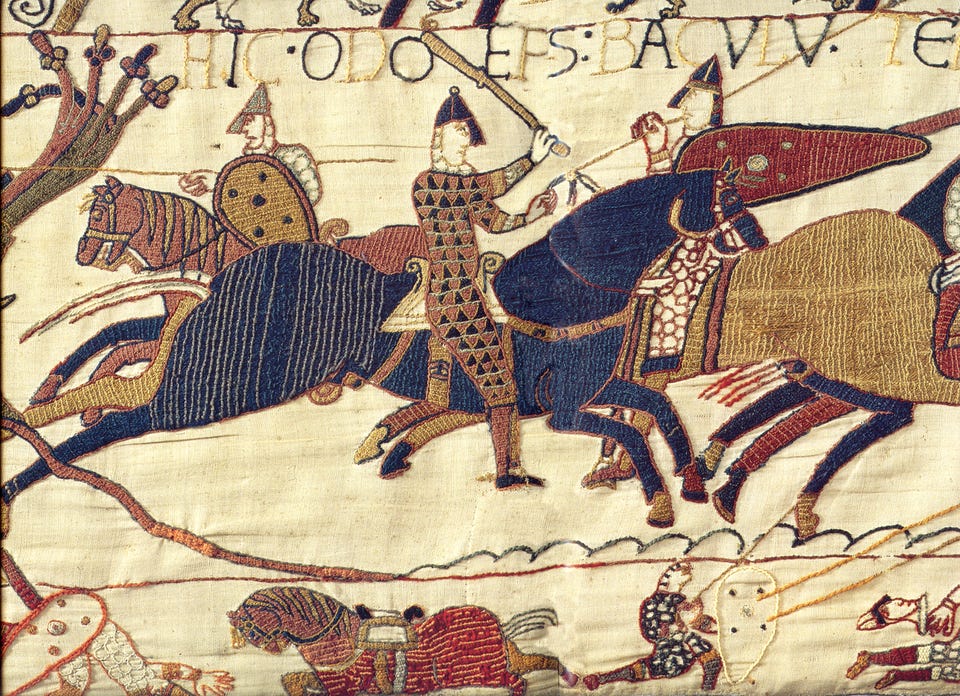
Peter Van Wijnaerde: So what’s so interesting about the Bayeux Tapestry is that it’s a scroll of 70 meters, it’s about 40 centimeters high or something. And it tells the story about why William the Conqueror thought he had the right to conquer England and what the deal was and how they prepared for it and who they talked to and the whole story from beginning to end is on that tapestry. And it was made...
Andrew Mitrak: So it’s a really wide tapestry. Cause it’s like frame by frame. Cause it’s... wow, okay. Yeah.
Peter Van Wijnaerde: And you can roll it up too. And it was made by his brother, the Bishop Odo of Bayeux. And what’s so interesting about it, it was not a painting, it was not a statue, it was a tapestry. And there is actually really no other tapestry of that kind. But if you think about it, it was mobile, you could roll it up easily, you can transport it easily and put it out somewhere else also as easily. So it was actually a bit of a prop of a PR tour for William the Conqueror by his brother the Bishop of Bayeux. And then it clicked. And I thought, oh my god, they should give this Odo guy an Effie Award or something because he invented a completely new way of storytelling to convince the people that this king is their legitimate ruler. And you don’t do that by building a cathedral because a cathedral is only in one place. So I thought this is a 1,000-year-old marketing campaign in front of me. So this is when it started clicking even more.
Andrew Mitrak: It’s, and you mentioned medieval art almost looks like a cartoon sometimes because it’s a little more two-dimensional, they didn’t quite have the same sense of perspective and lighting and depth that you convey that you’d later see in the Renaissance. But and then also medieval art sometimes you see it in memes today. Like you see it in internet memes and you see it kind of translates kind of because it’s cartoon-like. And in a way memes are such a huge part of internet culture and the way people communicate now. And this artwork, this tapestry kind of reminds you of a comic book almost, or a frame by frame and it sort of takes that type of visual storytelling and it seems like it communicates that to the masses who mostly would be illiterate but would still appreciate a story.
Peter Van Wijnaerde: If you walk in front of it and you just go, it takes half an hour to see the whole thing. And there’s action scenes in there and little jokes in there. There’s a warrior showing his bare ass to another warrior, things like this. So it’s also made to entertain. And I think that’s beautiful actually. It’s not just, this is history, this is also, also very interesting fact: the guy who made it gave himself a very prominent role in the history as well. But he was the guy who commissioned it right? So he could embroider himself into history.
Andrew Mitrak: Okay, yeah, so sort of the marketer, the marketers being a little self-promotional in a sense, or at least the patrons being self-promotional. That’s great.
Inspiration Everywhere: Learning from the Past
Andrew Mitrak: So I originally heard about your work from my conversation with Rory Sutherland, and he mentioned that he loved your presentation on medieval branding. Which is a very high compliment. I mean, take that win because if Rory Sutherland complimented my work, that would be wonderful. So very cool. So that was my initial spark for reaching out to you. And you’ve already talked a little bit about medieval history or medieval artwork and how it relates to branding. So was this part of that presentation? The Bayeux Tapestry, was this part of the presentation or could you just share what the presentation was that Rory was speaking about that seemed resonated with him?
Peter Van Wijnaerde: Well, the insight that, so this was not about the Bayeux Tapestry. This was about some tactics that some brands do today that you can also see that kings and queens did in history. So it was actually, I think the title was ‘Medieval Marketing Lessons for Modern Marketers‘. That was the thing. And it all starts from this, the reason that if you are in power, you need to stay in power. And there are several ways that you can stay in power. And one of them is fighting. But that’s not a good thing for your resources, because you will lose a lot of men and you will lose the belief of your people if you lose too many men. So for efficiency reasons, the kings and queens looked for different ways to keep their power or make sure no one started fighting them. If people believed that it was not worth fighting you because you were stronger, because you had better allies, or you would end up in hell because this guy has the blessing of God. That’s also an important one. So they started making up all these stories. And what I did in this talk was picking apart some of those stories and translate how they are actually being used today. Just to show, not to tell people this is the way you should do marketing, but more to tell people, like, if you’re in marketing, if you’re in branding, open your eyes. Ideas are everywhere. That was more, and I look for them in history. Other people can look for them in kindergartens or whatever, because I assume a lot of real human behavior also happens there.
Andrew Mitrak: It is one of the professions where I feel like you can become a better marketer by opening your eyes to just about anything.
Peter Van Wijnaerde: Yeah, I really like Rory’s point. He said if you’re a, what was it, not an attorney, but something else...
Andrew Mitrak: An accountant.
Peter Van Wijnaerde: An accountant.
Andrew Mitrak: Yeah, this was actually coming back to the Rory presentation. He said if you’re an accountant, I doubt that you can get much better at your job sitting at a coffee shop looking at the world. But if you’re a marketer, you certainly can. Of course Rory said it in a more eloquent, witty way than I did, but...
Andrew Mitrak: He does.
Peter Van Wijnaerde: But also what he also did, like after he referenced me, he immediately started talking about Attention Deficit Disorder. So that started to worry me as well.
Andrew Mitrak: Oh yeah. Who was that guy who was all over the place at that conference? I’m sure that was just a coincidence.
Peter Van Wijnaerde: But he brought of course the example of Charlemagne to the topic. Like he was the first king to be coronated by a pope. That was a masterful move. No one would attack him after that, or you end up in jail or in hell of all places. Yeah.
The Medici Family and the Power of Storytelling
Andrew Mitrak: Great. So yeah, that’s right. So let’s talk about some of the specific examples in your presentation. You mentioned Charlemagne and being coronated by the pope and sort of a, I don’t know what you call that, a partnership marketing or influencer marketing or just aligning yourself, positioning... it’s a lot of elements of marketing to that. What were any other examples from that presentation from the medieval presentation?
Peter Van Wijnaerde: Well, we talked about the Medici Family. The Medici Family, if you walk... have you been to Florence? If you walk around in Florence, you see a lot of marble statues. And if there is a common theme among most of those marble statues that the Medici Family has commissioned, they liked their Greek heroes who liberated cities. Like how Hercules won against the monster Cacus, or The Rape of the Sabine Women. Also a story about how Rome came to power. So they really liked those stories. And one of the stories I like most about them, and this is the one that I put in the presentation as well, is the story of Judith, which is actually a biblical story from the Old Testament. And Judith was this woman who, her city was besieged by General Holofernes. And no one was doing anything about it. And Judith went to the tent of the general. He was drunk. She seduced him and then she beheaded him. That’s actually a very horrific story. Now I’m telling it.
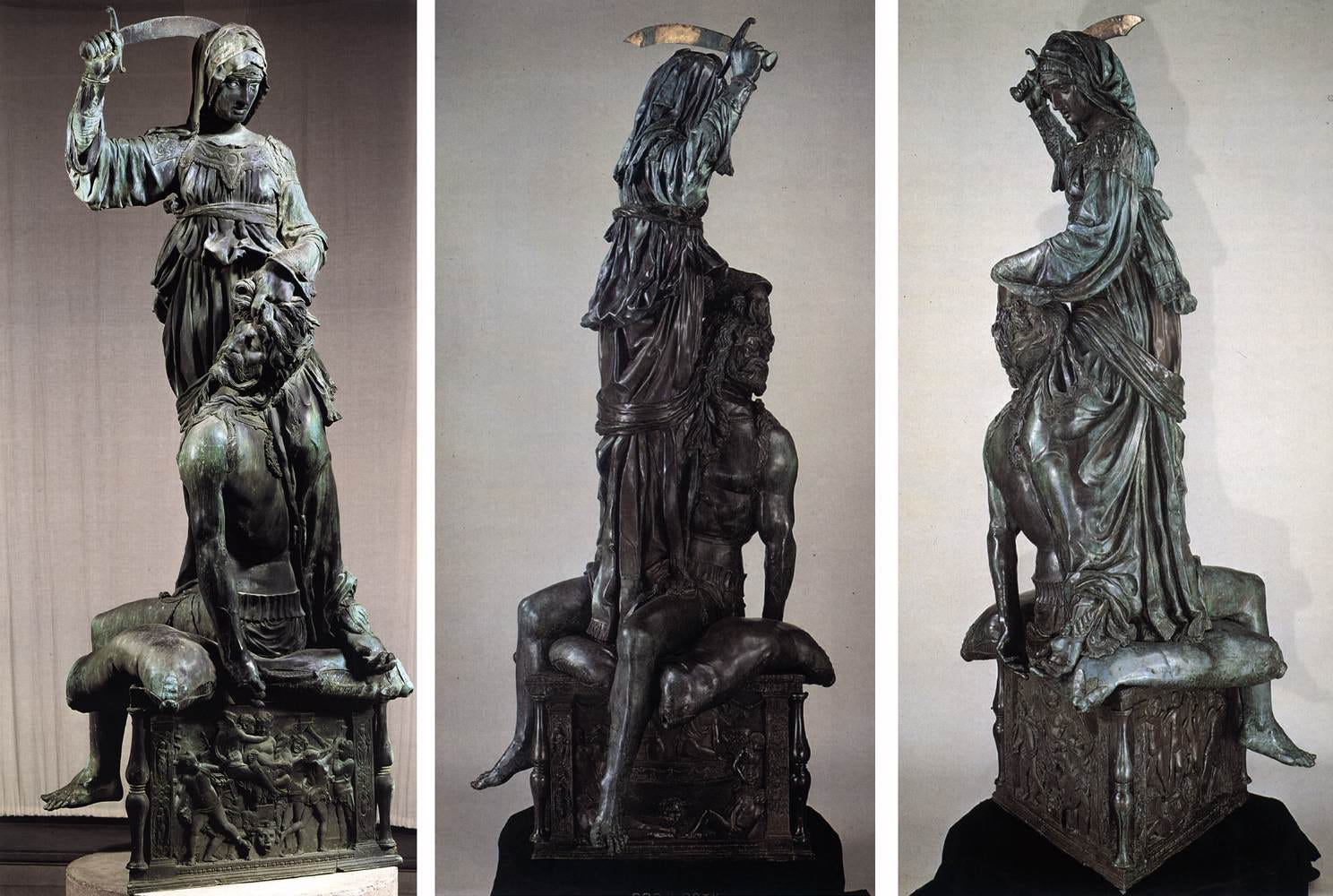
So they had this statue with a lot of stopping power, actually, because there is a woman and she is beheading a man. So this was in the middle of their garden where all the rich people came, where all the influencers came. They were... by seeing this, there was a plaque on the bottom of the statue telling the people, this is Judith, this is what she did, and she is a bit like us, because we also freed the city. So they used all these stories of Hercules, of the Sabine women, of Judith, to remember the people that they were the ones who freed the city. The funny thing is, however, when other people took over Florence, they used the same statue and just changed the inscription on it. They said, the Medici are like Holofernes and we decapitated them. Right. The Medici, of course, they came back and they put the statue again in the middle of the square with another inscription: We freed the city from the revolutionaries, whatever it was. So yeah.
Andrew Mitrak: The danger of how you position your enemy is that later you could be positioned as the enemy by your replacement.
Peter Van Wijnaerde: Yeah.
Recontextualizing Art: Artemisia Gentileschi’s Judith
Andrew Mitrak: And on Judith slaying Holofernes, I was always more familiar... when I took art history class, this one, the Artemisia Gentileschi, I think painting of this one. And I always find it interesting to see the same scene compared in two different ways, right? The Donatello statue Medici one. It’s big, it’s public, it’s proud of it. And this one, it’s this painting, it’s happening kind of in darkness and it seems almost more secretive when it happened. And it’s funny to just kind of compare similar scenes and how they’re represented.
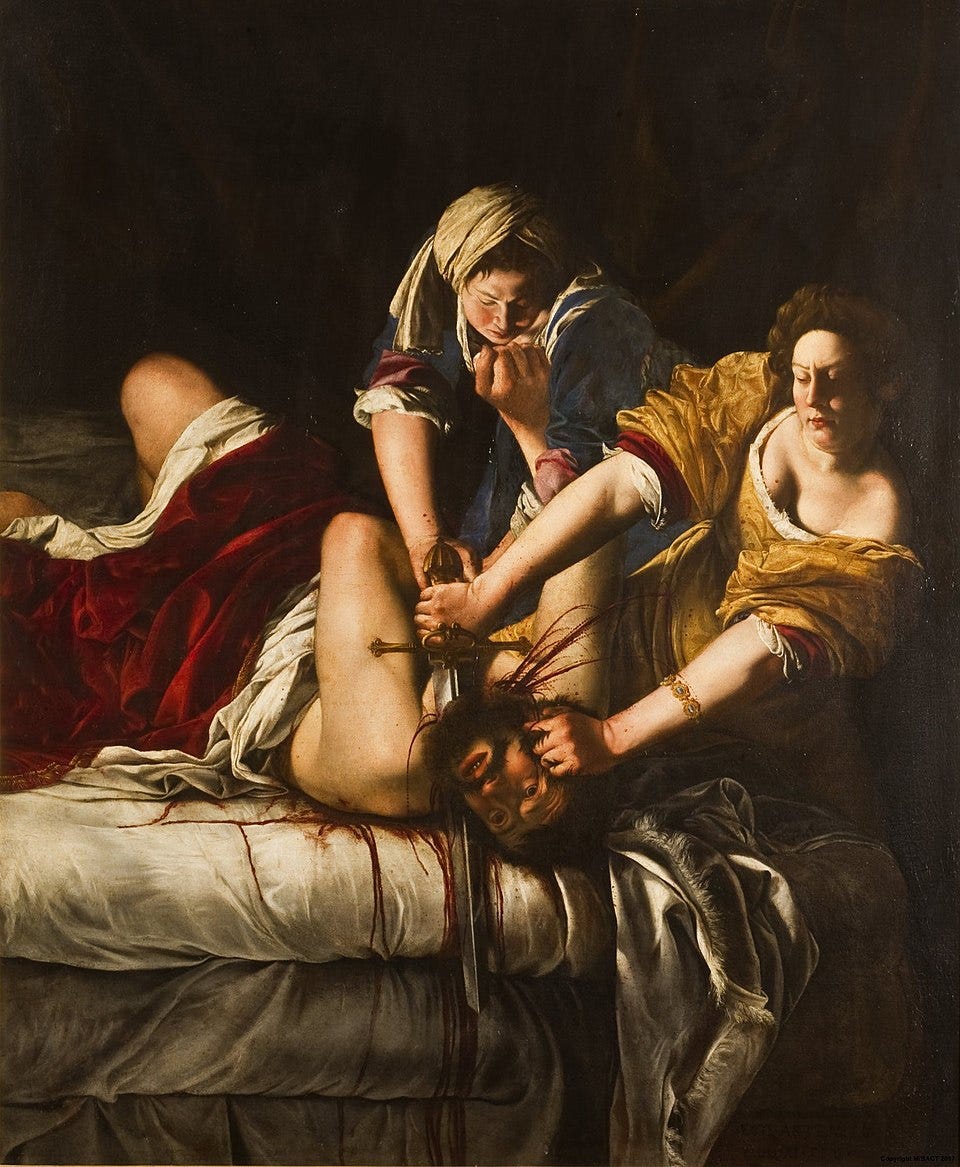
Peter Van Wijnaerde: But I get the chills when I see this painting. Because this painting was painted by Artemisia Gentileschi. And she paints a completely different Judith than all the others did. Because actually, if you want to know, and this might be a triggering subject, the guy that Judith is beheading here is actually a portrait of the guy who raped Artemisia Gentileschi when she was younger. So this is not a biblical story. This is a true story, or at least how it happened in the head of Artemisia Gentileschi.
Andrew Mitrak: Oh wow. I never knew that background to this. That brings a new perspective on it.
Peter Van Wijnaerde: Yeah, she is one of the biggest Baroque painters, and maybe the only female one we know of. And in a lot of her paintings, she brings a female perspective to a topic that was painted by a lot of men. So, but that’s going off topic, of course, but it’s...
Napoleon Bonaparte: Master of Public Relations
Andrew Mitrak: One of the other figures of history that you’ve spoken about or written about is Napoleon. And he is sort of a widely recognized figure in history. And I’m wondering what could Napoleon teach a modern marketer?
Peter Van Wijnaerde: Also to learn from history. Because Napoleon also had himself coronated by the Pope as the Emperor. He brought in Pope, who was it, Pope Pius VII. I’m not sure. To witness him coronating himself. That was the big difference. But he brought in the Pope. So that’s one thing. So he took a trick from the old books. And he did that a lot. Because he brought in all the neoclassical style, like the Roman coding of power he did. So he used a lot of old coding of power. He used a Pope for his coronation. He also, and this I think is the most interesting thing, not the most interesting, but the thing that I find very interesting about him, is during the French Revolution, there was this painter, you might have heard of him, Jacques-Louis David. And he is the guy who painted the coronation of Napoleon. It’s a really big painting. It’s huge, it’s detailed, it’s amazing, it’s theatrical, it’s...
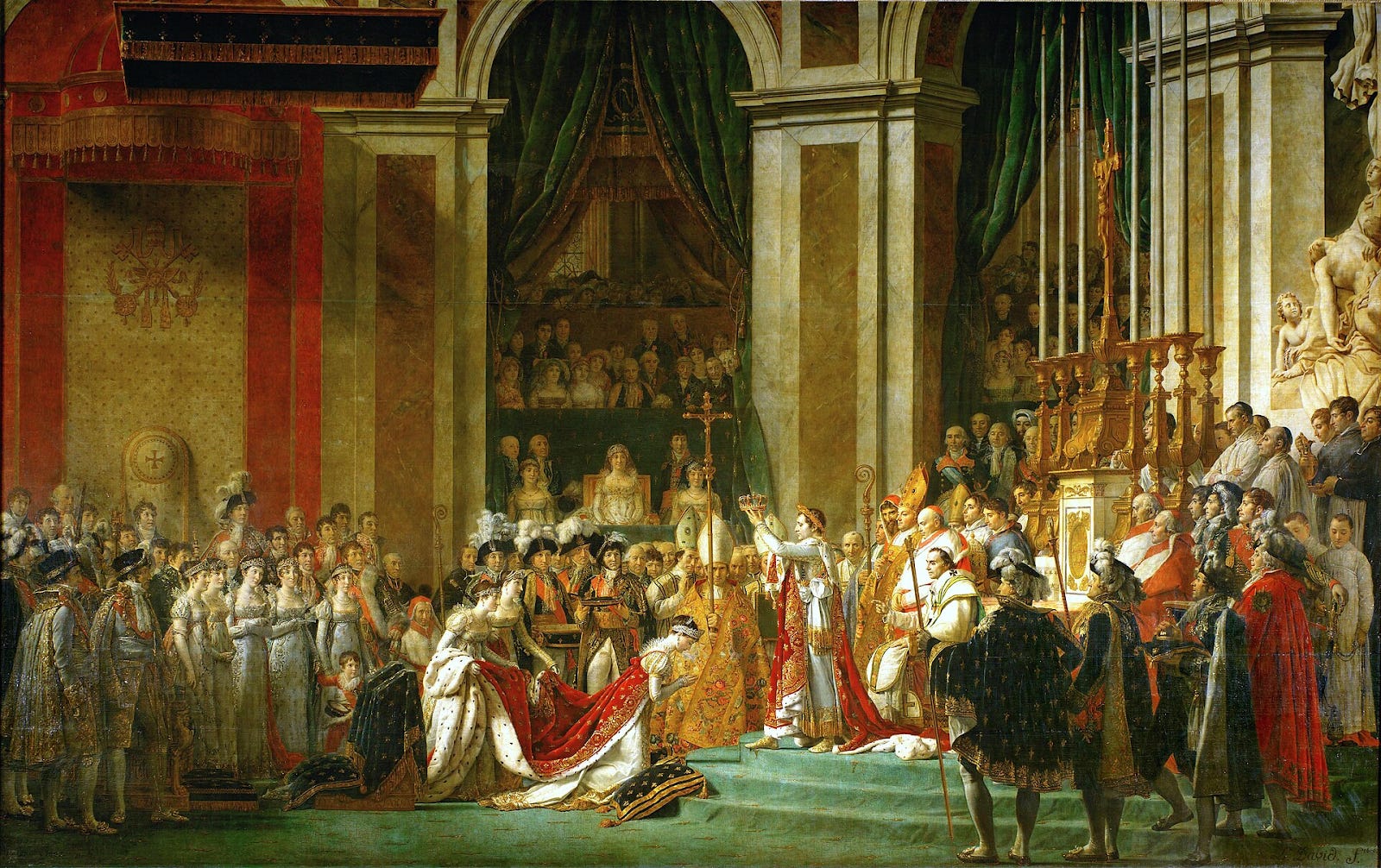
However, Jacques-Louis David was maybe the star entertainer of the moment. Having your portrait painted by Jacques-Louis David was like having your face on Person of the Year on the Time (magazine) cover. So that was the impact that that guy had. This guy was commissioned a lot by Napoleon. He painted Napoleon over eight times. A lot of people when they think of Napoleon, they see Napoleon on a stud riding his horse over the Alps with the big wavy cape in red in the background. That’s the image that a lot of people have of Napoleon. That was also painted by Jacques-Louis David. So he painted him over and over and over again.
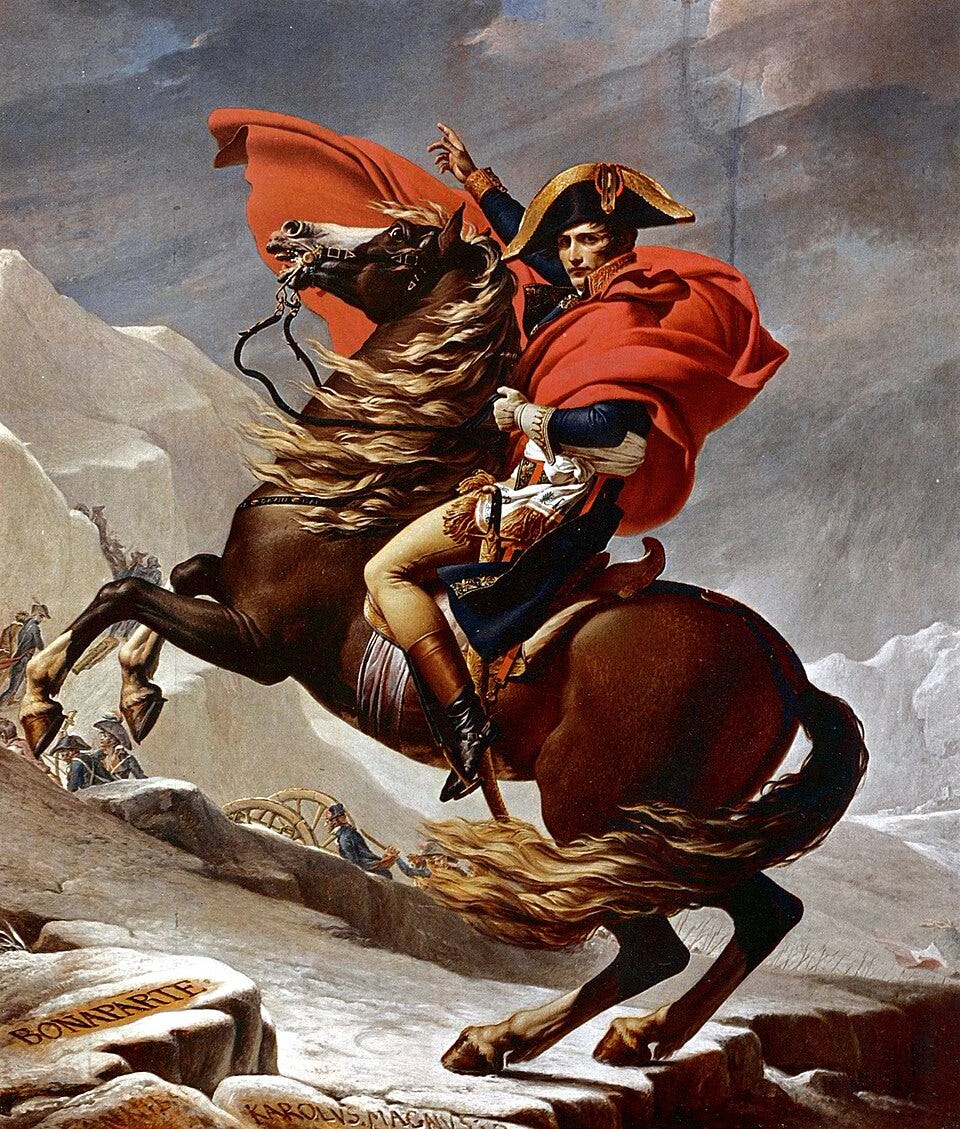
And what was so interesting, why the Pope was there, and this is not confirmed by academics, this is just my thought. One year after the coronation of Napoleon, Jacques-Louis David painted Pope Pius VII. So that Pope that was there. So probably that was part of the deal. I’ll catch you on the cover of Time (magazine) if you attend my party.
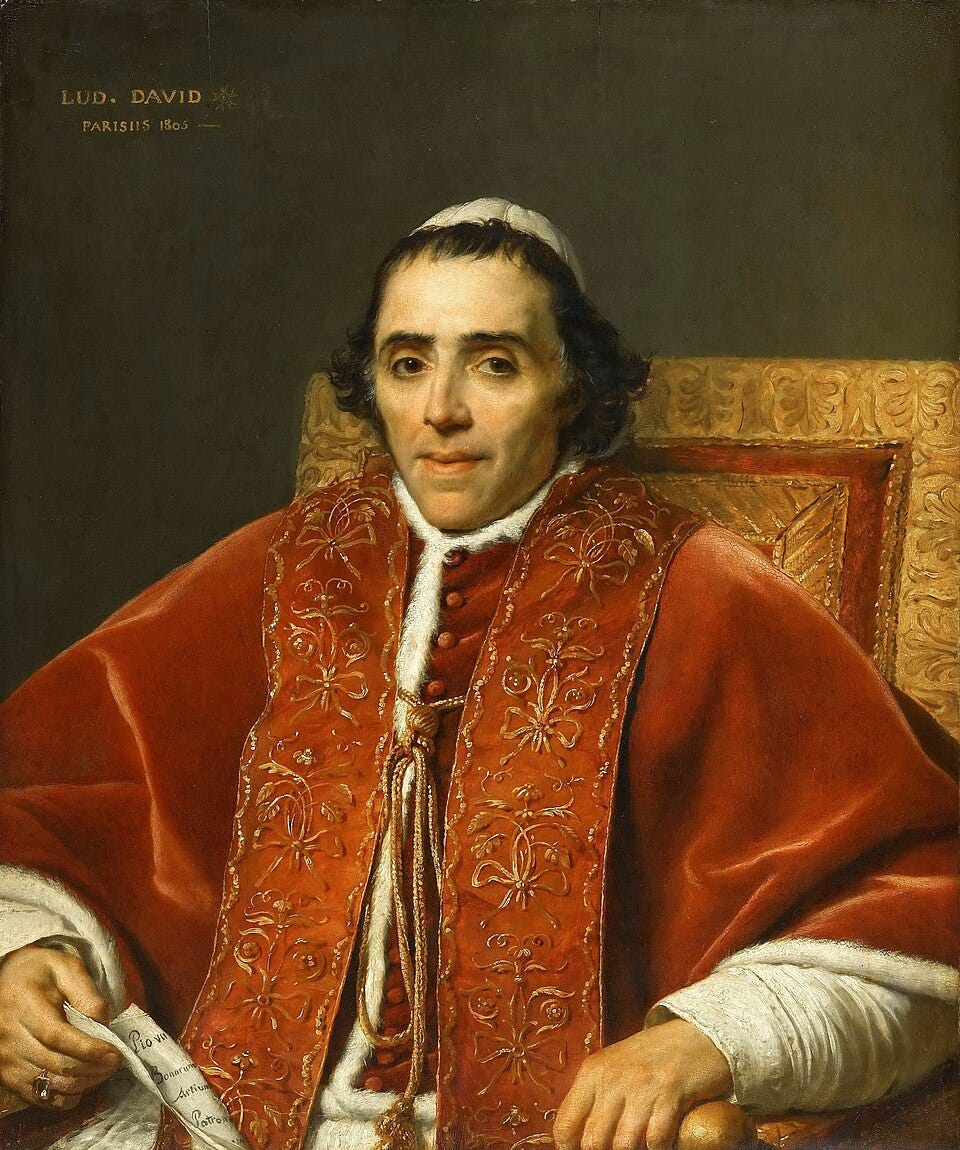
Andrew Mitrak: Yeah. So there’s kind of who you choose to be painted by is another layer of status that a figure like Napoleon or the Pope in this case would think about. Is sort of obviously there’s a lot of stature, you’re an Emperor or you’re Pope, but even further cementing it is I’m being painted by the most popular artist of the day. And therefore kind of I’m assigned a certain stature. I’m trying to think of who the equivalent would be today. Like who you choose to have your portrait painted by or your photograph taken by. I guess there’s Annie Leibovitz or somebody like that.
Peter Van Wijnaerde: But maybe you should take it in modern ways. It’s not having your portrait painted by, but maybe imagine having your biopic done by Ridley Scott. Or Steven Spielberg doing your biopic, you know?
Andrew Mitrak: Although I don’t think Ridley Scott’s biopic was the most flattering or frankly even the best movie he’s done.
Peter Van Wijnaerde: Well, there were statues made by Napoleon trying to flatter him that he had destroyed or put away in closets and stuff like this. There’s a lot more artwork of Napoleon going around that he didn’t want us to see.
Investigating the Money Behind the Masterpieces
Andrew Mitrak: So you said that when you stand in front of a painting, you’re asking different questions. You’re asking who paid for this? Why did they pay for this? And so could you talk about, we were talking about the artists behind the paintings, but could you talk about the money behind the paintings and sort of what were the motivations of patrons and how is that akin to funding a marketing campaign?
Peter Van Wijnaerde: Yeah. So when you are standing in front of a painting that is like a murder scene or something, then it’s a very healthy question to answer who wanted this made and who wanted to have this above the fireplace. Because by today’s standards, that would not fly. Your wife would say, “Andrew, no, we will not have this above the fireplace.” Right? So that’s the kind of dialogue that goes around in my head when I look at a painting that has a big murder scene. But I made a little series about horrific paintings and who wanted them painted and why. And Spanish kings were very good at collecting horror paintings and that had more to do with telling people something about yourself. Like if you believed in violence, because the stories you pick are the ones that you associate with. So people would see, damn, this guy, Philip IV, I think, he had Rubens paint Jupiter devouring his son. Why would you want to have that? It’s about power, it’s about destroying future power, it’s about punishment, it’s about all that. You don’t mess with a guy who hangs that above his fireplace. And he had this hunting lodge and it was full of these horrific paintings. Just telling the people that came into his place, this is how I look at punishment, this is how I look at power, and this is how I look.
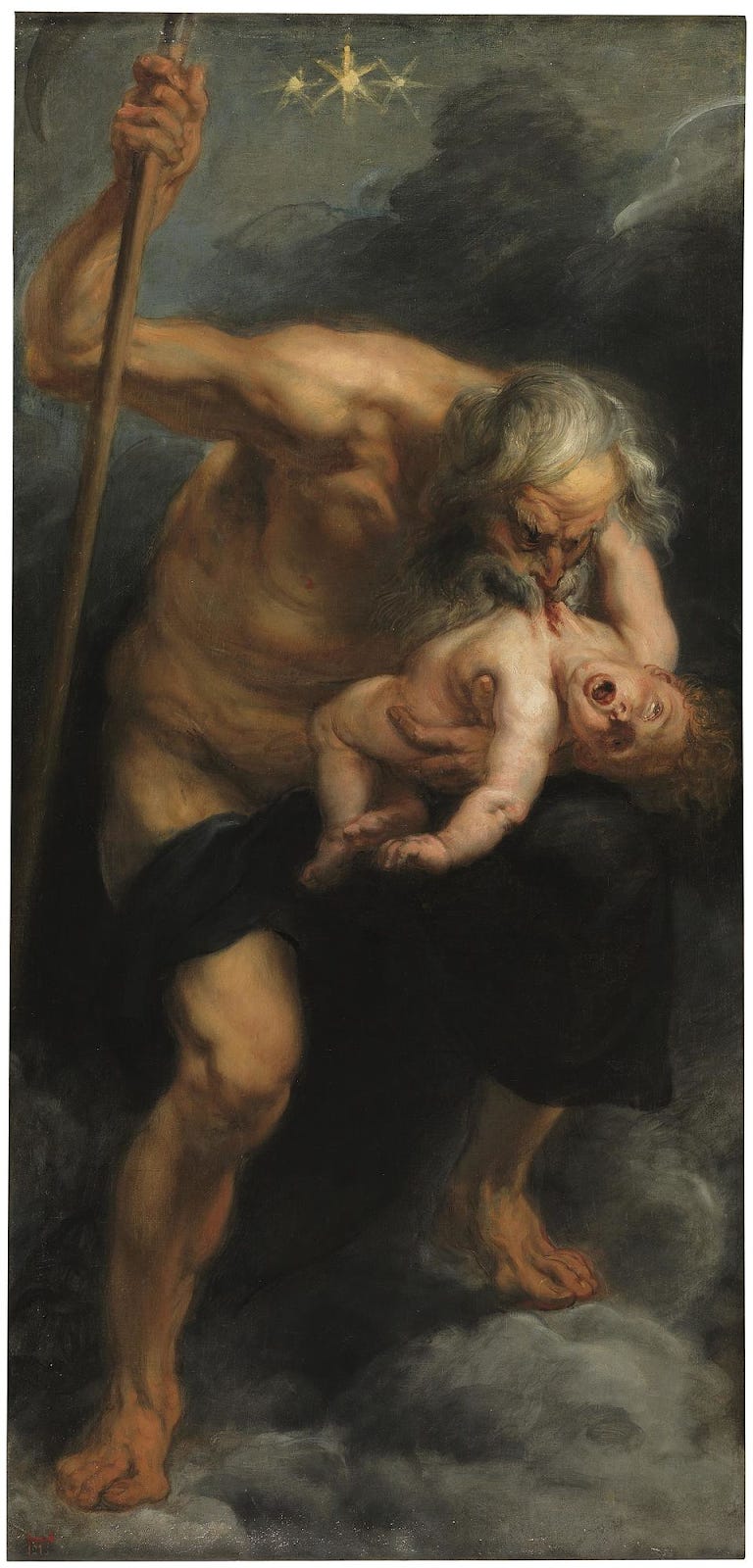
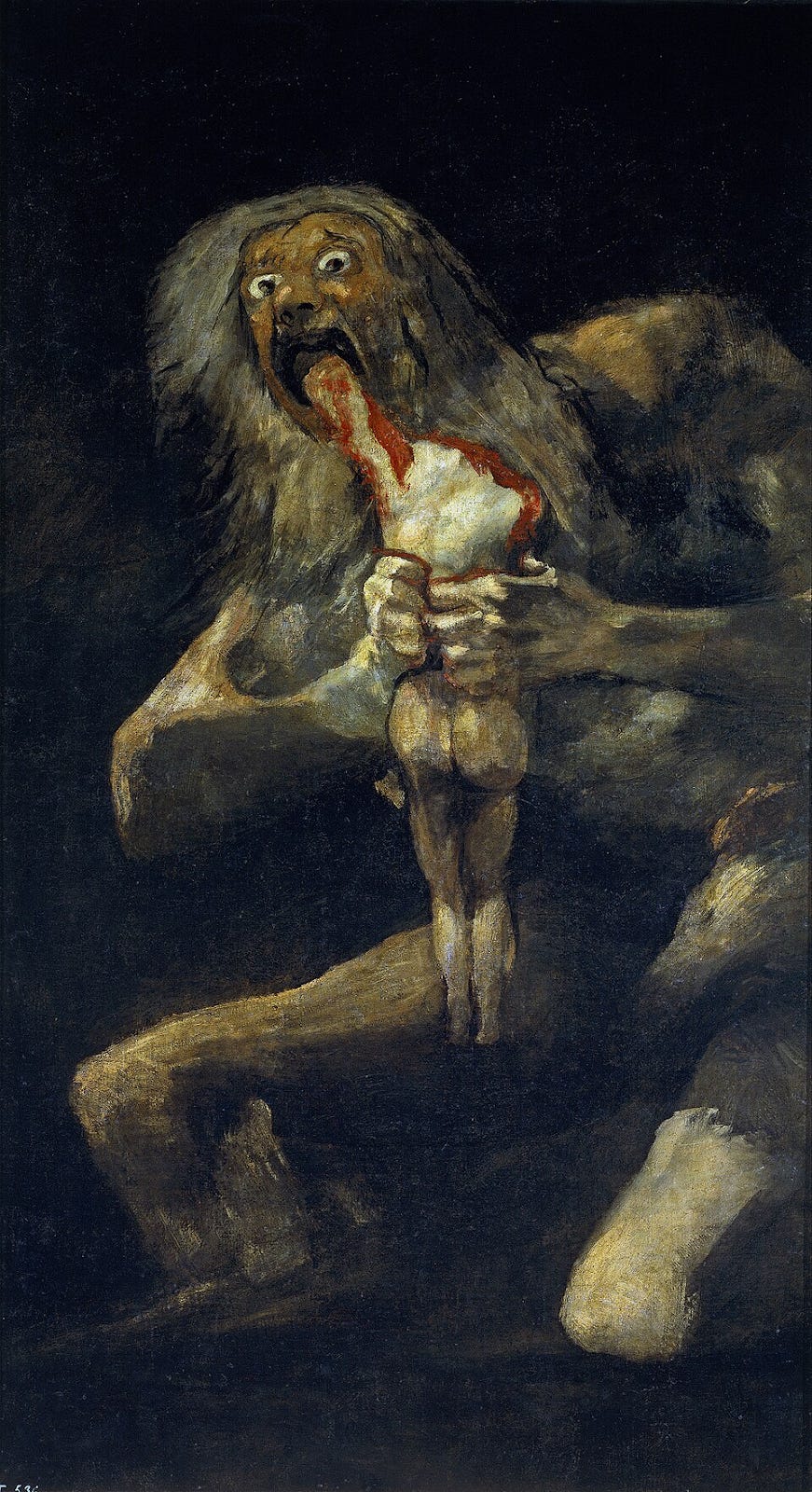
Andrew Mitrak: Was this the Goya one, the Goya with Saturn devouring his son, or was this a different one?
Peter Van Wijnaerde: No, no, no. The Goya one was painted for private reasons because he was a bit mad. It’s the Rubens one. The Goya one is true horror. Rubens is still better actually, I guess.
Andrew Mitrak: That is pretty horrific too. But yeah, that is funny because when you think of Rubens, this is not what you think of, right? You think of full-figured women and happier scenes than this. I guess there is eating in this one, so there is that.
Peter Van Wijnaerde: Yeah, that’s true. But there’s also, this was Baroque time, right? So it was stopping power, shocking people, and whatever it took to get people’s attention was okay. Naked women, cannibalism, it was all good.
Andrew Mitrak: And just for comparison, the Goya one is also truly horrific. When I’m sharing these, sometimes art history really takes you to very dark places.
Peter Van Wijnaerde: It does. And that’s maybe why it’s good to ask why it was painted. You know, about, I think, there is this painting by Caravaggio. It is David beheading Goliath.
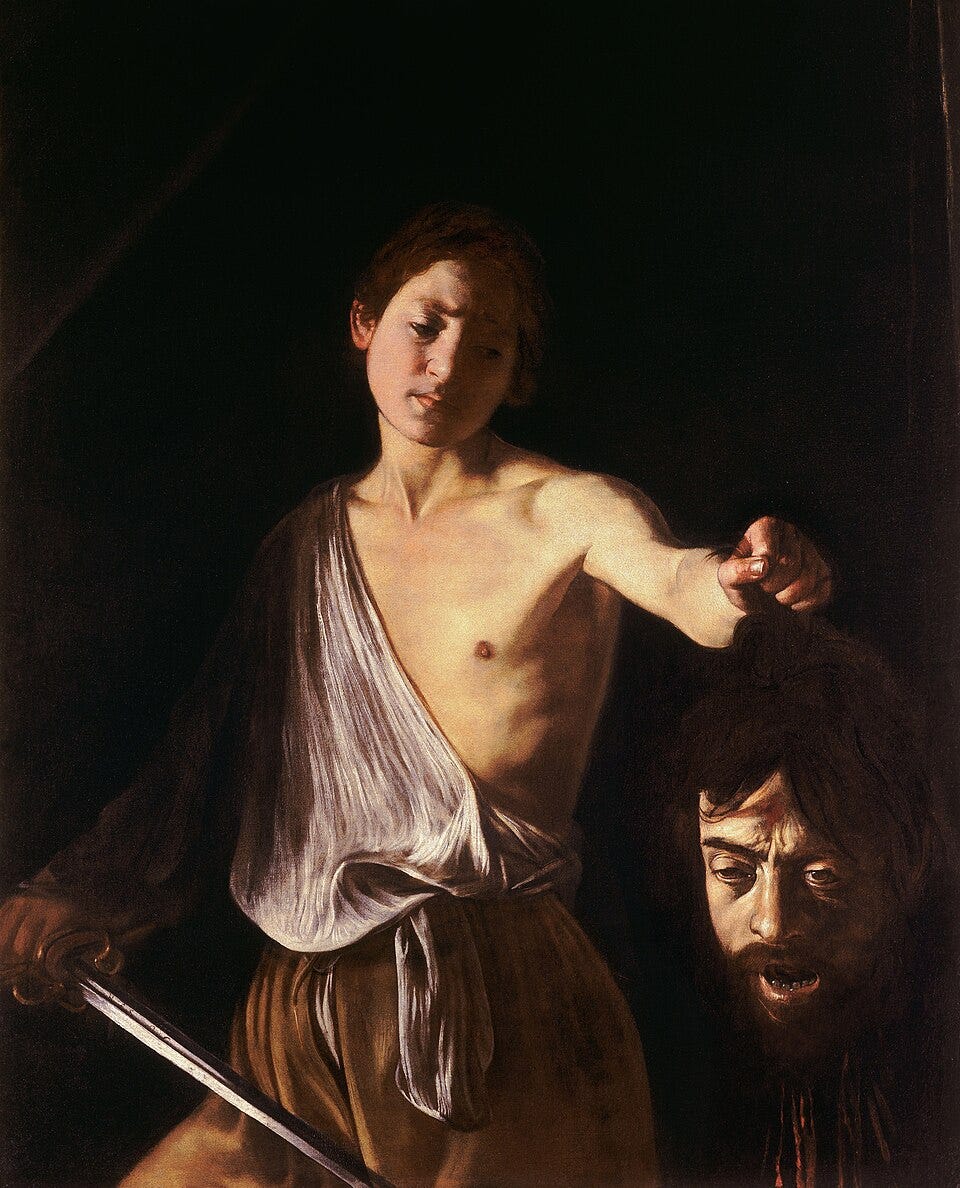
Peter Van Wijnaerde: And the reason why he painted that was because he wanted to get pardoned for a murder he did by a cardinal. So he painted that as a gift for a cardinal to get pardoned. And actually, he uses his own head. So the head of Goliath is actually a self-portrait of Caravaggio. And on the knife, there is an inscription on humbleness. So this was painted as an apology for a man in power. So imagine if you’re one of the most popular painters of the time to get something from a cardinal, a pardon, you send him a biblical story in this format.
Andrew Mitrak: Yeah. So if I’m ever in trouble as a marketer, I’ll see if I can do a marketing campaign for someone. You make a free campaign to get out of it. I’ll feature you on my podcast. I don’t know if that will work. I’ve got to get more sway.
Peter Van Wijnaerde: They need to pardon you. Yeah.
The Separation of Art and Commerce
Andrew Mitrak: So one of your arguments that you talked about is how the separation of art and commerce is actually sort of a recent invention, that it’s only from the last hundred or 200 years maybe that most of art history that art was commercial and that there’s a very clear relationship between the patron and the artist and the commercial nature of the art. So when did you come to this realization that for most of human history that art was a marketing department, so to speak?
Peter Van Wijnaerde: Well, it becomes very obvious, for instance, during the Reformation and the Counter-Reformation. When painters like Cranach the Elder was painting biblical stories but from this reformist point of view for Martin Luther, right? And you see a completely different way of looking at things like Adam and Eve or a completely different interpretation of the Three Graces, stuff like this. And then it goes back to Rubens again, who was a Counter-Reformist, and he paints it completely different, the same story, and when the same story gets told in a very different way, then there is someone who wants to sway you in one way or the other. So this is just one example of when it becomes very obvious you can put two times the same theme together right next to each other, and it becomes a completely different story because another brand is telling the story, the Reformation or the Counter-Reformation.
So that’s one thing. But it’s just like what I told you before with Judith or with Charlemagne, it’s all been marketing. It was the biggest visual thing that you could hang somewhere. People would look at it, you could tell a story about it, it was a conversation starter. So it had attention, and where there was attention, there are people wanting to do something with that. When there is a point in time where art freed itself from advertising in a way, or from marketing or branding in a way, I think that was at the point of the Secessionists in the turning of the 19th into the 20th century. You had artists in Munich, in Berlin, in Vienna, in Paris, in Brussels, and they were kind of fed up with how the powerful, the kings and the princes and the regents, were actually deciding what was art and what was not. And they wanted to paint because everyone was commissioned by those people. So you could only paint what you were commissioned for to paint at that point, or you could only show what the prince allowed you to show in the salons of that time. So you had the Munich Secessionists, the Vienna Secessionists, and the Berlin Secessionists, and they basically made a new business model around art because they lost their funding. They made a new business model, and that’s actually the point in time when art freed itself a lot from branding influences. But anything before that, the person who paid for it had a motive. And that motive was a lot of the time in the statue or in the painting or even in the architecture.
Addressing Skeptics: Is connecting art history and modern marketing too much of a stretch?
Andrew Mitrak: I’m sure there are listeners who’ve enjoyed this conversation like, oh, that’s really interesting perspectives on art, but maybe they’re still a little skeptical. Like, is this really marketing? Is it a bit of a stretch to call that marketing? Have you ever encountered anybody who pushed back on this or said, this is all interesting, Peter, I like your ideas, but marketing requires a market. And this is pre-capitalism, this is pre-mass production, and that there’s something different about a patron funding a work of art prior to that era versus somebody commissioning an advertisement today. Maybe there’s lessons, but it’s just too much of a stretch. Like, have you ever encountered that or how would you respond to somebody who had that perspective?
Peter Van Wijnaerde: Well, I have not encountered that question, but probably people were thinking that. A lot of people. First of all, I would always say don’t take it too serious, it’s a game you play in your head and you can learn a thing or two from the game that you’re playing in your head. So don’t take it too serious. But on the other hand, the need, like I said, marketing is one of the oldest professions. Even before capitalism, there were moments when people needed to gain trust of other people to get something done. Like the Tapestry of Bayeux, when William the Conqueror was taking over England, he did not spit out the Anglo-Saxons that were already having thriving businesses there. He embraced them. And actually, when you look at the tapestry, you would think that they would make fun of the enemy. No, no, no, the Anglo-Saxons are very much respected in the tapestry. So that’s kind of proof that this is a piece that was there to sway people into your way of thinking, into your direction actually. So as long as someone had to influence masses to get something done, I think this counts as branding. And this could count as marketing. Even though there was not a market, then it will have another word. Then call it public relations, which is basically maybe also fits in the marketing realm, right?
Andrew Mitrak: No, that’s right. I think it’s public relations. I think there is sort of a funny line when I did my episode on this man named Edward Bernays. He wrote a book called Propaganda and he also coined the term public relations counsel. Or, sorry, counsel on public relations. And he kind of popularized, I’m not sure if he invented the term public relations, but he definitely cemented and popularized public relations and sort of positioned it against propaganda. But there is a very fine line between the two. And if I was to think of the political advertisements of this, most of the ones that you cite are somebody in power cementing their power and reclaiming their power. But it’s different than when you think of a political ad today, like vote for me because I want the power, right? It’s more of an asking permission for the power, it’s helping anoint me to the power, and I guess it’s sort of pre-democracy somewhat, or sort of pre-political campaigns as we think of them today. So I’m sure there were political ads that were older, but it seems like a lot of them are more an authority figure confirming their authority, sort of persuading the masses so otherwise I don’t have to use violence to persuade you and less of used on their rise to power to build consensus.
Peter Van Wijnaerde: Or think of Napoleon who basically promised Pope Pius VII to be on the cover of Time magazine if he attended his coronation. So Napoleon also needed funds for his wars and people also needed to pay for those wars. So a lot of what he was doing was campaigning to get the power as well, but it had a bit of a different mechanism.
The Dangerous Myth of Progress
Andrew Mitrak: One of the essays that I think encapsulates maybe not your entire worldview, but a certain perspective that you bring is this dangerous myth of progress. I think this is something we fall into a lot, where, and this might be why marketing history is underappreciated by modern marketers, is that we think, “Oh, we’re so wise and know so much more today, and people back then, they have nothing to show us.” And so I think this essay really resonated with me. Can you talk about the dangerous myth of progress?
Peter Van Wijnaerde: Yes. It’s a big topic, because it’s also a dangerous topic. Because it’s all based on John Gray, which is a British political philosopher. And he just claimed that there is no such thing as human progress. We’re not better than the people in history. We’re just the same, in his words would be the same barbaric animals. We have lust and everything we do is motivated on lust, on gaining power, and this is John Gray’s way of putting it. It’s a very pessimistic way. I find it easier, I accept the idea that there is no such thing as real progress. I think that we are exactly the same human beings like our ancestors. I’m a romantic and I believe that people fall in love and people want to be loved and those are very strong drivers for people to do stuff, to get together, to make groups and stuff like that. So I also believe that, by just the idea that those people in history were just as complex as us, we don’t throw away history just like that. We don’t think of medieval people as people who were praying all day and being dirty all day. No, they also wanted to be someone and they also wanted to express themselves. They’re just as complex as you and me, which makes you look different at the people in history, which that strategic thinking was not invented in the 50s. It’s way older. It’s just a pair of glasses you put on, look at history like this, and then you start learning because those are just not previous versions of what we are. We are not the beta to their alpha, they’re the same. We’re just the same but we have Google and we have OpenAI.
Andrew Mitrak: And so the idea is that technology compounds, our ideas compound on each other. There are things that grow, there are systems that grow, there’s culture that grows. But we as individuals are sort of born at square one and have the same fundamental flaws or the same underlying desires that somebody from a previous era has.
Peter Van Wijnaerde: Yes. And John Gray would then argue that everything compounds. So we might have better health, we might live longer because of science. But then again, in the year 1000, there was no way to push on a button and to kill an entire city of people. So not only our wisdom compounds, but also our ways to destroy compounds as well. So to him that’s a bit of an equalizer. And maybe that’s why he has more of a pessimistic view on the whole thing.
Embracing the Messy Reality of Human Nature
Andrew Mitrak: I think that part of this myth could describe why marketing becomes more sterilized and almost too reliant on data, that maybe we think of consumers as rational actors, that we optimize for efficiency, and that sometimes we forget that human nature is irrational, it’s messy, we have desires, we want meaning, we want connection. And some of that gets lost. And is that kind of why you partly bring up this idea of, because when you look at some of the examples of artwork we’ve seen, they’re so primal, right? They’re violent, they’re lustful, there’s naked people, you know, there’s all these things. And...
Peter Van Wijnaerde: And that’s a bit of a different thing. But as soon as you start to embrace the fact that good things are messy, the world becomes way more beautiful. I was going through this personal crisis, I think, walking through Berlin and I went to the Berlin Wall. I’ve been in Berlin, I cannot count how many times I’ve been in Berlin. But at that point I was, no, no, Peter, you’re going to walk to Checkpoint Charlie, you’re just going to look at it. And there it struck me that I was very angry about all the noise in the news that I hear every day and all the opinions that you read everywhere, even about marketing, about our profession. It’s going to be ruined because of this and it’s going to be ruined because of that. And then I thought, like, you’re standing at Checkpoint Charlie and then you know that when you’re standing on the US side of Checkpoint Charlie, you know you’re standing on the good side. That’s what we learned to think, and that’s still true. You’re standing on the side where you are free, and that’s the noisy side. When you step over and you cross the no man’s zone and you go to the other side, that’s the silent side. And we think that peace should be silent. But peace is messy. We think that people should be structured, but people are messy. They have desires, it’s what drives them.
And as soon as you start looking at people as messy beings, then it becomes way more fun. You don’t look at people as a data set. That’s, I guess, it helps when you’re looking at a lot of people at the same time. But in most cases, you’re making a billboard not to address a thousand people, you’re making a billboard to address that guy in that moment or that woman in that moment. And it should appeal to them, and then it should also appeal to their lowest common denominator. Like, what is it that drives these thousand people? And that’s going to be something very primal. And that’s also the same with art history. You see cannibalism, you see naked flesh, you see the things that attract our eyes. We are attracted to two things. Pure biologically, we’re attracted to beautiful things, and we’re attracted to horror because when somebody yells “tiger”, you better pay attention and run, right? And that’s about it. And that’s why I think that primal is good, and messy is good, and this idea that we are progressed does not help us a lot, I think.
Andrew Mitrak: Well, thanks for talking about that visualization of being at Checkpoint Charlie and going from point A to B. I only visited Berlin for the first time in my twenties, but I remember when I first learned about the Berlin Wall, probably early in high school, I think. So I was probably 14 or 15 years old.
And when I saw pictures of it or I saw a video of it or I saw slide projectors in class and that there was a side with all the graffiti on it, where all the people had spray painted, and I thought, “Oh gosh, that was their side.” Then I learned, “No, that was our side. That was the side of freedom.”
That was probably the first time that I realized, “Oh yeah, that graffiti, that messiness, that thing that’s undesirable at times, that’s a sign of freedom and liberty and personal choice.” For all of the downsides of that, I think it’s still the choice that I’d make. I choose to live in, and the place I’d prefer to be is the side that has some of those downsides where people can spray paint a wall and not get executed for it. And that’s good.
I think that was among the memories I have in a classroom, probably among the bigger ones that actually stuck with me in a way. So I think it’s an important, instructive lesson somewhere.
Peter Van Wijnaerde: I remember also next to Checkpoint Charlie, there is a McDonald’s. And the other day I would think, “Did they really have to put a McDonald’s here?” But I think that’s the most important McDonald’s there is in Europe. So I went in and I got myself a burger, and I think it was the best burger ever.
Andrew Mitrak: You know, there is something about McDonald’s. McDonald’s in Europe are usually actually a little nicer than the ones in the US. Because I’ve gone to a McDonald’s close to midnight and had a coffee in Europe, and you don’t do that here. Pulp Fiction has a whole riff on that.
Applying Art History to Modern Marketing Campaigns
Andrew Mitrak: You personally, aside from your Substack, which is great, have you applied this historical perspective to your work? Are there pieces of art history or broader themes that you as a marketer or as an advertising person have brought to your commercial work that you can speak to?
Peter Van Wijnaerde: I think yes. I bring it up every day, I guess, because we work with a lot of people that bring in all the modern stuff, and I like to be a bit of a contrary. So I bring in the old stuff. And I will be the one that addresses that this is people first. That we should be talking, if you make an ad, are we listing the features, or then I’m going like, “Maybe we should talk about the aspirations of the people, and what are the aspirations of the people?” That’s one side, the subject you talk about, this is what you bring in from the old. What you also bring in from the old is make sure you keep having stopping power. Because if you would look at some people, they would put three USPs with a little V sign next to it. It has no stopping power. So what you also learn by looking at art is that you look for stopping power. So inherently it’s been baked in always. But I remember it was before Corona somewhere, I was working on a campaign to promote the Masters of Belgium, and those are Peter Paul Rubens, Jan van Eyck, and Hieronymus Bosch. Which is technically not a Belgian, but at least a lot of paintings in Belgium. And I was trying to promote Rubens museums and places where you can see Rubens in Belgium on Facebook. But my campaign got banned by Facebook because of nakedness on there.
Taking on Facebook: The Rubens Museum Campaign and “Titty Riot”
Peter Van Wijnaerde: Andrew, I got so angry. I remember I was in a meeting with the client, and it was the third time that we had to report no results because Facebook kept banning our campaigns for Rubens. And I got so angry, and I remember in the meeting just saying, “You know what we need? We need a titty riot.” In Dutch I said “tittenrel,” which is basically a titty riot. “Guys, we need a titty riot, and we’re going to do it.” And I took my stuff, I stepped out, and that was that meeting. A few weeks later we were at the office, we were like, “Okay, now we need to think of something.” And we thought of a campaign. Basically very simple because we were angry, right? We wanted it to be very simple. If you had a Facebook account, we banned you from certain rooms in our museums where there was naked people. If you were an American, you were banned. If you had a Facebook account, you were banned. Because according to your rules that you signed, this is inappropriate, you shouldn’t be looking at it. And we made videos of that. There was even an old woman flashing her boobs out of protest against the gatekeepers of the room. That really happened. And we released that video.
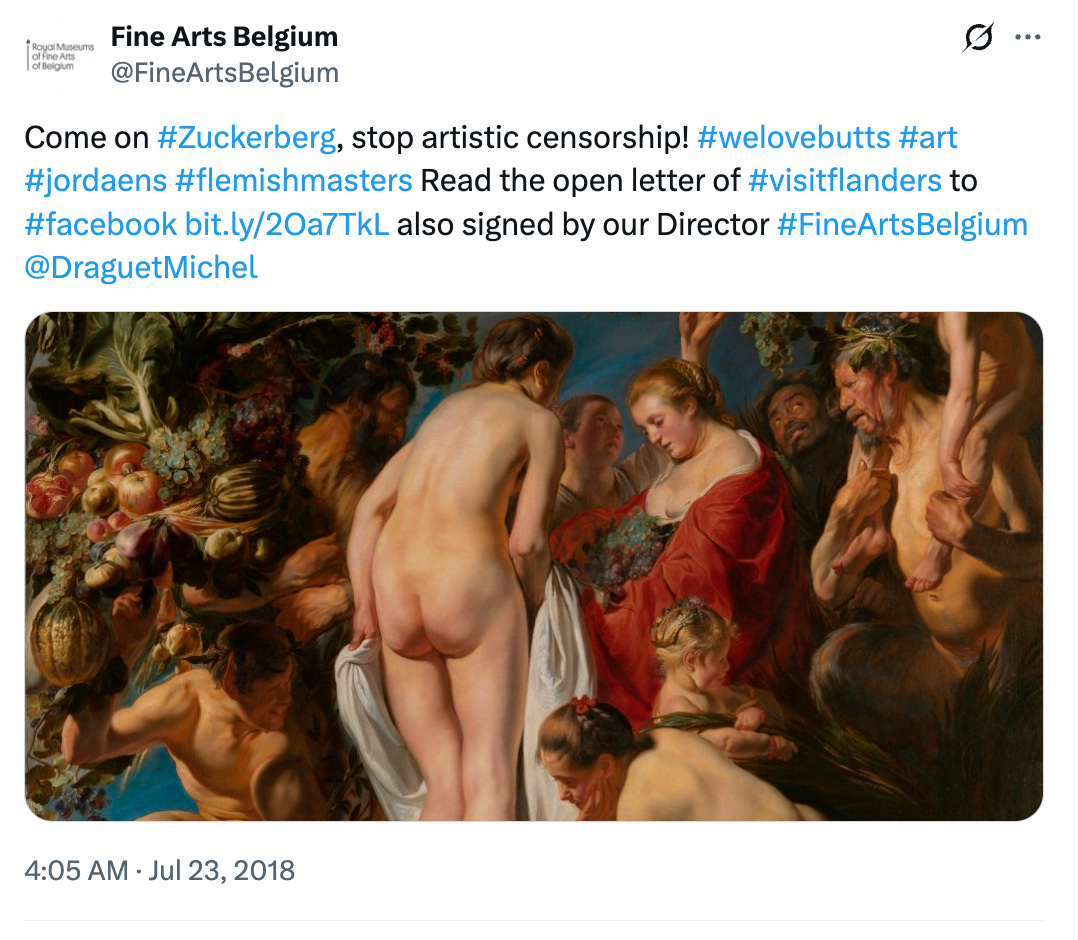
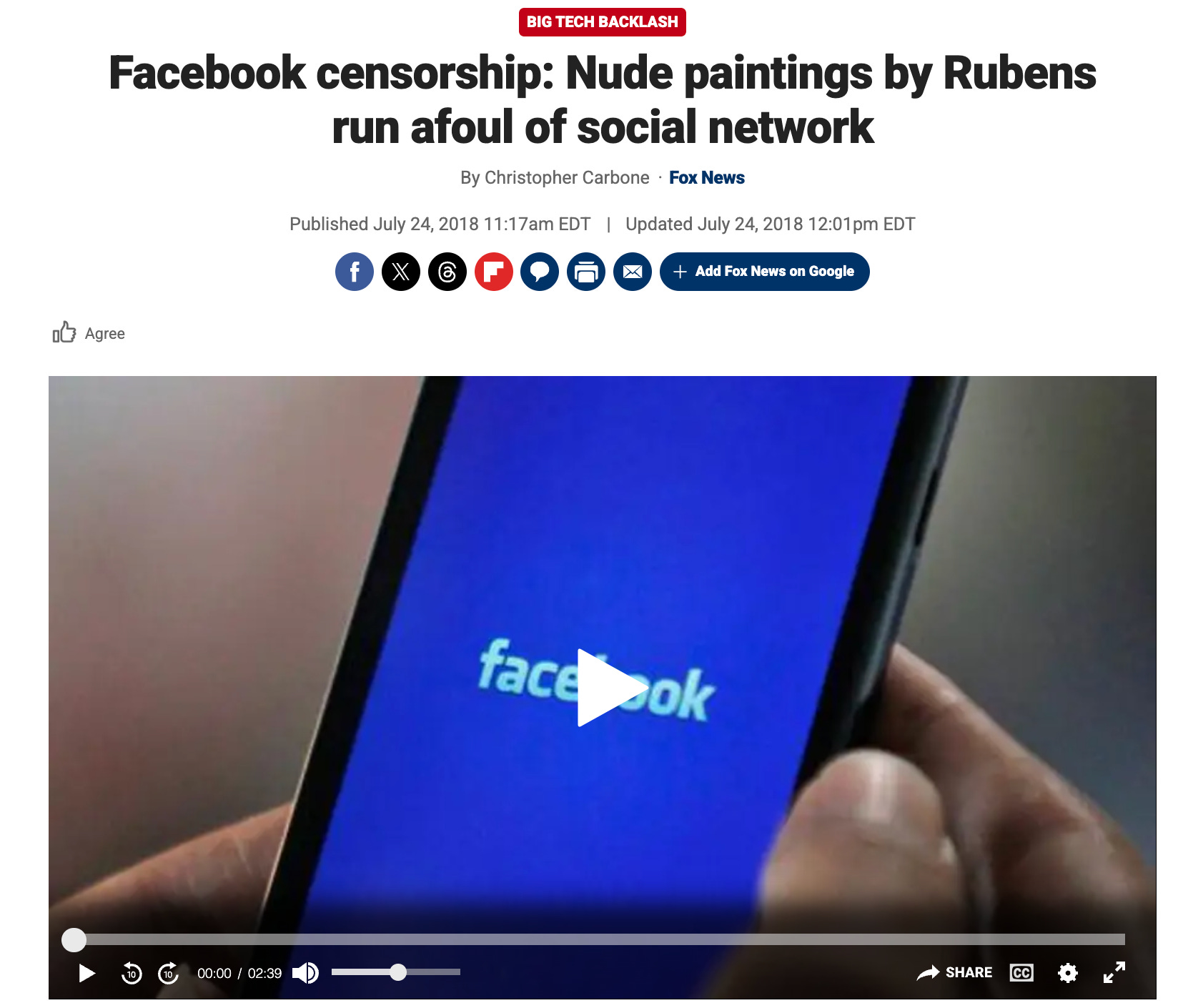
We made a statement with the museums, and Fox News picked it up. They actually sent a delegation to Belgium. We talked about it, and the rules were changed about naked paintings on Facebook. So I think that’s the closest that art and my daily job came together at that point.
Andrew Mitrak: That’s incredible. That’s a great example. By the way, this podcast has a clean rating, so I have to bleep. With Rory Sutherland, I bleeped a lot of his profanities. I’m going to keep in “titty riot” though. I’m going to see whether “titty riot” gets us an explicit rating or not.
Peter Van Wijnaerde: Sorry for the profanity.
Andrew Mitrak: That story though also is just incredible, that you kind of take something where nothing creates scarcity or gives you more desire than saying you can’t come in, and turning what could have been a failure into a big public relations win, and actually a great content win, and actually changing Facebook’s policies, which is a pretty rare thing to do. That’s just incredible. So that’s great. I was thinking though of when you bring in, if you’re riffing on ideas with other people on an advertisement, on a campaign, sometimes I feel old school bringing up the Pepsi Challenge or a campaign from 20 to 50 years ago. Or I feel very old school if I bring up a David Ogilvy quote or something. But I imagine you sometimes bringing up medieval art as a reference point in a brainstorming session and getting strange looks from your colleagues. I’m just wondering if those kinds of things ever come up.
Peter Van Wijnaerde: They are quite used to that. They are quite used to me. I also know, I have developed a skill that I can quickly see when people’s eyes are glossing over when I’m doing another of the medieval stories, yes.
Why Marketers Ignore History and Chase Trends
Andrew Mitrak: So I think we have a lot in common that we’re both unusual for marketers. I think we both take different types of looks at history and marketing and certainly try to learn from the past. But the industry overall is very obsessed with what’s trending at this moment right now. Most marketers don’t look to history. In fact, as I was making this podcast, one of the reasons I made it is that there wasn’t really one that was a podcast dedicated on marketing history. And I also do love what’s recent, but the fact is there’s a thousand podcasts or more just about marketing and artificial intelligence. And it’s a topic that I like, I just think that it’s so saturated that it would be difficult to break through. And I thought let’s look at history, because it’s important and nobody’s talking about it. But why do you think it is that nobody talks about it? Why do you think it is that we’re rare for marketers? What could it be?
Peter Van Wijnaerde: Well, first of all, the marketeers are the weird people here. Because if you look at the non-fiction book sales, history is always on top of it. Not like number one, but like for sure number three, number four. People just love history. And it’s just marketeers that don’t, I guess. So we are not the weird ones, we’re actually the normal ones, and all the other marketeers are weird. Let’s just agree on that.
Andrew Mitrak: On that point actually, Apple for 2025 named a podcast called The Rest Is History as their number one podcast of the year. And it’s a history podcast, right? A lot of people listen to podcasts. So you’re definitely right on that. Anyway, I didn’t mean to interrupt, but just wanted to reinforce your point.
The Shift to Digital Channels and the Loss of Historical Context
Peter Van Wijnaerde: So normal people love history. Marketeers are not normal people. And I think it’s normal, right? In the last 20 years, marketing has changed so much. So the internet came up, digital marketing came up. And marketeers were, instead of sitting next to your old creative director and learning from that guy, because sadly it was mostly a guy, learning from that guy how advertising worked, how it was to be appealing, how it was to be desirable, what people were desiring, right? So you would learn that skill from someone you were working with. But in the last 20 years, we were a bit distracted by learning about new channels and how to master those new channels. And there was new, new, new. First there was internet, then there was Facebook, then there was Twitter, then there was Instagram, then there was influencer marketing, which is basically, as we already agreed, a very old concept but that is happening again. So you have all these marketeers who actually just needed to handle a few channels, but a lot of thinking about people, and now they flipped it around. They have to think about channels. They have to think about technology. That’s one thing. It’s always the new thing, the new thing to follow. Also, marketeers are very biased to putting “new” on something. And putting “new” on it makes it important, right? Pay attention, this is new. And this is just how marketeers are trained to function in the last 20 years. And it’s not that it’s a bad thing. A lot of good things have come from it. A lot of things are more efficient now. But if you ask why marketeers are not busy with history, it’s that they’re always very busy with something that is possibly tomorrow or missing out on today. There is nothing more exhausting than trying to follow AI trends, right? But that’s what they are doing.
The Democratization of History and Storytelling
Andrew Mitrak: Sometimes I feel cautious about where I step as a historian because I don’t have academic credentials as a historian. And I in some ways am even more cautious than you are because I mostly just ask questions. I haven’t published too much of my own opinions on marketing history so much, at least not yet. But I’m always cautious to do so just because I know that there are academics out there who really study the history. And I don’t want to in some ways undermine their credentials or feel like anybody can be a historian. Because I don’t necessarily know if it’s true that anybody can be. But I guess I wonder if you have any feelings or thoughts on academia as gatekeepers of historical records and how you react to that, or why you felt brave enough to say, “Hey, I’m just going to step out and talk about history and that’s fine.” What’s your overall perspective on this?
Peter Van Wijnaerde: History is something, if you live where I live, I live in a medieval city called Ghent. History, first of all, is everywhere. So you grow up with history. There is a medieval castle in the center of my town. And you know that little boys, they all adore knights and fights with knights on horses and all that stuff. Well, we had the set for that in the middle of the city. So first of all, that’s already something different, that you like grow up with history. That’s one thing. So history is not just a thing that lives in books, it’s a thing that lives around you. However, academics are very boring because they list facts. And that’s good. There should be someone who’s listing facts. But the problem with facts is as soon as you start chaining facts, you create a story. And it becomes a curation of facts becomes a story. And there is this old saying that history is written by the victors. That was kind of happening. That was happening all of the time. Now today, thank you Google, thank you the internet, everyone has access to research papers. Everyone has access to a lot of stuff. Also, a lot of people who studied history have a place to tell their story. They’re not in dark rooms anymore with a lot of dust. No, they can tell their story on the internet and they have been doing that. So people have been chaining these facts into more interesting stories. And when only academics are doing it, you get a very clean version of history, which is true. But for instance, did you know that Belgium, where I live, once had a king that was a bigger monster than Adolf Hitler? A lot of people don’t know about it. At least, I never learned about it in school. I only learned about it maybe 10 years ago. That’s maybe being very generous to myself, maybe it was only five years ago. When other people who were not in the dusty rooms, but people of minorities were doing their own research in history, and they had means to make those stories popular. And telling them, “Hey guys, we have a very dirty colonial history in Belgium and we should know about this.” So this is not to roast the people at the academies, but this is just to tell that more people can tell the stories now based on the facts. Because whatever you do, it should be true. You can’t say that Jesus was sitting on a dinosaur, right? That’s just simply not true. But as long as you work with the facts, you can give parts of history that people were not thinking of. Just like what I did with you with the perspective on the Artemisia Gentileschi painting. By just giving you five more facts, your whole image of that painting changed.
Confronting Colonial History and the Power of Hidden Stories
Andrew Mitrak: Yeah, that’s right. You bring up Leopold II and sort of the Belgian Congo. It is something where I knew that story and I kind of knew it, but I had to look it up. Because I read Heart of Darkness back in the day. But in some ways that story hasn’t been told in the same way that resonates in the same ways that, say, so many stories about World War II. It’s sort of the defining global moment of the 20th century where that really influenced sort of the second half of the century’s media and art and film. And some of the best films of all time are World War II films or talk about The Holocaust. But because the stories that are written about the Congo, of course Heart of Darkness is a great work of literature, but it’s not sort of a popular book in the sense that even the adaptation of it is Apocalypse Now, which isn’t about the Belgian Congo, right? And not about Leopold II. So it’s kind of a story that because of the era or because of the documentation of it, or I don’t even know exactly why, it just hasn’t translated completely. But it just because the story is not told, people don’t know that history as well. So it is sort of incumbent on not just the fact-finders, but also the storytellers who can create something that really resonates with people, is that’s how the story becomes better known and how people better know their own cultural history.
Peter Van Wijnaerde: That more people can start telling history stories, and I think that’s amazing. That’s just more perspective on life.
The Future of History and Where to Find Peter’s Work
Andrew Mitrak: Any other thoughts on sort of the future of history?
Peter Van Wijnaerde: The future of history. You know what would be amazing? If let’s just assume that fact-checking will become more easy, and searching for facts will become more easy. Then I think a lot of history will be more personal. Because when people find themselves or recognize themselves in history, it gets a certain validation. “I’m here because I was always here,” or “I have a right to be here because I was always here,” you know? For instance, immigrants. History tells the story about the value of immigrants in a certain country. It validates them. So I think history can cure a lot in the future.
Andrew Mitrak: I think that’s a good note to wrap up on. Peter, I’ve really enjoyed this conversation. Where would you point people online to read more of your work?
Peter Van Wijnaerde: I would love it if they took the time to check my Substack. It’s peterVW.substack.com. That’s where I release my stories. They’re quite long sometimes. You have experienced that, but yeah.
Andrew Mitrak: They’re well-researched, well-articulated, and they’re full of great pictures as well.
Peter Van Wijnaerde: One of the things that I try to do on my blog since a year was never use artificial images, only art. And that’s a fun way because sometimes you have to look for a long time to find the right picture. But that’s also how I always get to the other subject that I want to write about.
Andrew Mitrak: Absolutely. That’s great. Well, yes, I will link to peterVW.substack.com in the blog that accompanies this post as well. So I hope listeners check it out. If you’ve listened to this podcast, I’m sure you’ll appreciate Peter’s work. So Peter, thanks so much. I had a lot of fun with this conversation, so I really appreciate your time.
Peter Van Wijnaerde: Thank you. This was also for me a lot of fun to do.


