

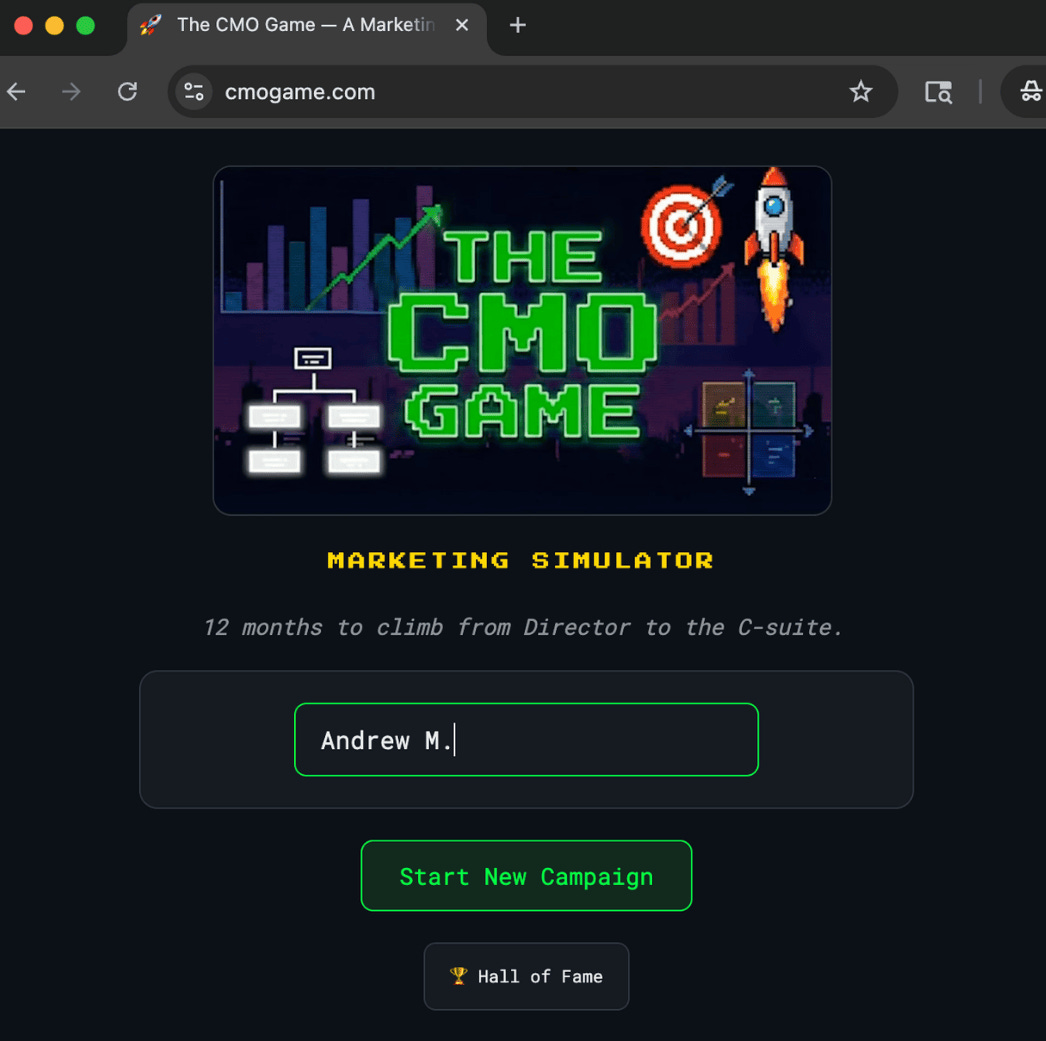
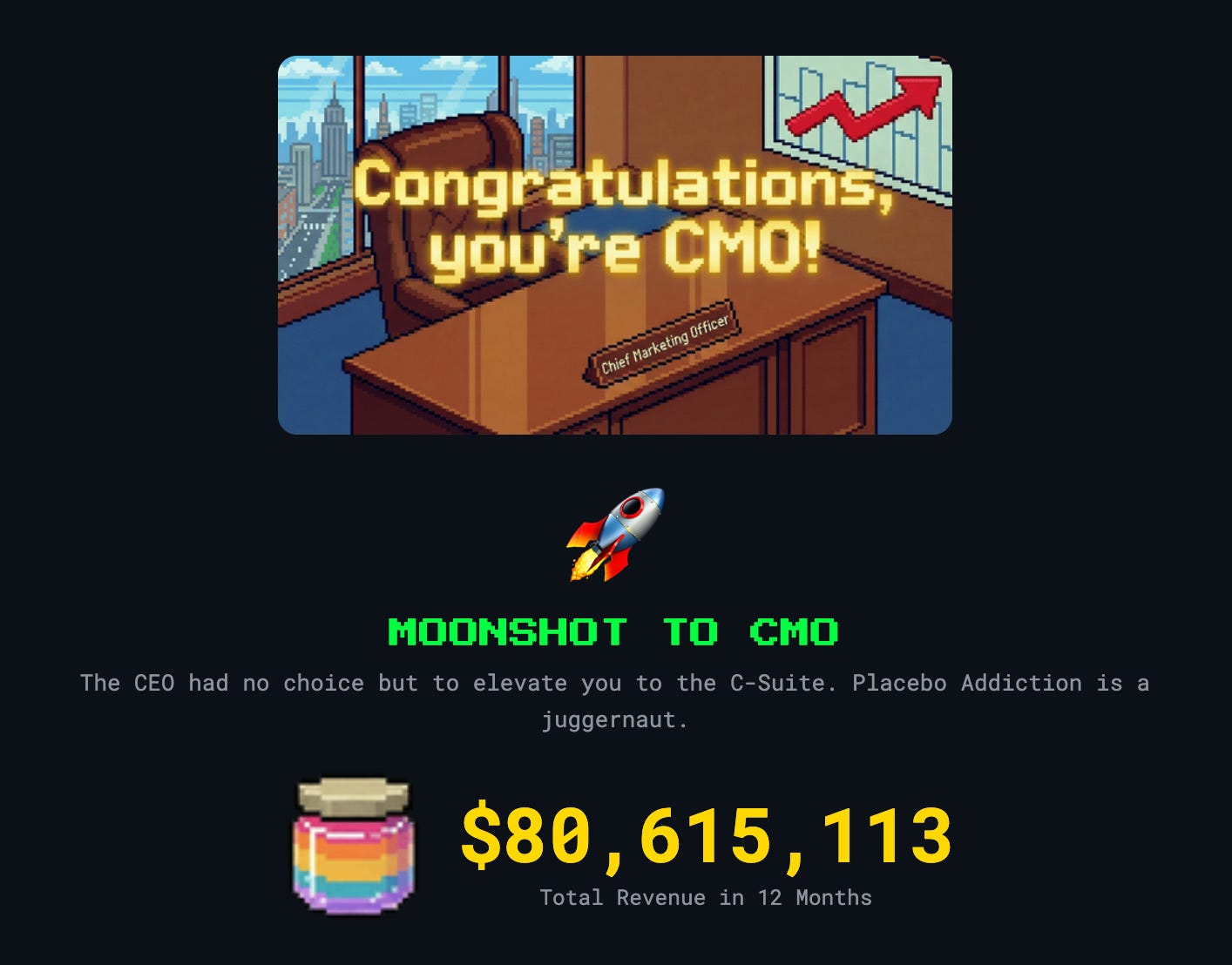
I have an unusual update this week: I made a game! It’s called The CMO Game.
You have 12 months and $5M to launch your product and climb from Director of Marketing to the C-Suite. But your CEO has aggressive goals and if you don’t meet them, it’s game over.
It’s like The Oregon Trail, but for marketing (and with less dysentery).
You can play it right now at cmogame.com.
Why Make a Marketing Game?
One thing I keep coming back to is how hard it is to teach marketing. Books, lectures, and podcasts are great resources, but I really learned marketing by doing.
By making bets with incomplete information. By investing in long-term brand while hitting this quarter’s target. By navigating pressures from sales, finance, and the CEO.
I designed The CMO Game with this in mind, creating an active simulation that complements other resources for marketing education.
Like this podcast, it’s free and designed for marketers who want to get better.
How The CMO Game Works
You start by picking a product: soda, shoes, skincare, or software. Then you lock in positioning: premium, value, lifestyle, or disruptor. Each combination has unique marketing channels and tactics that work best.
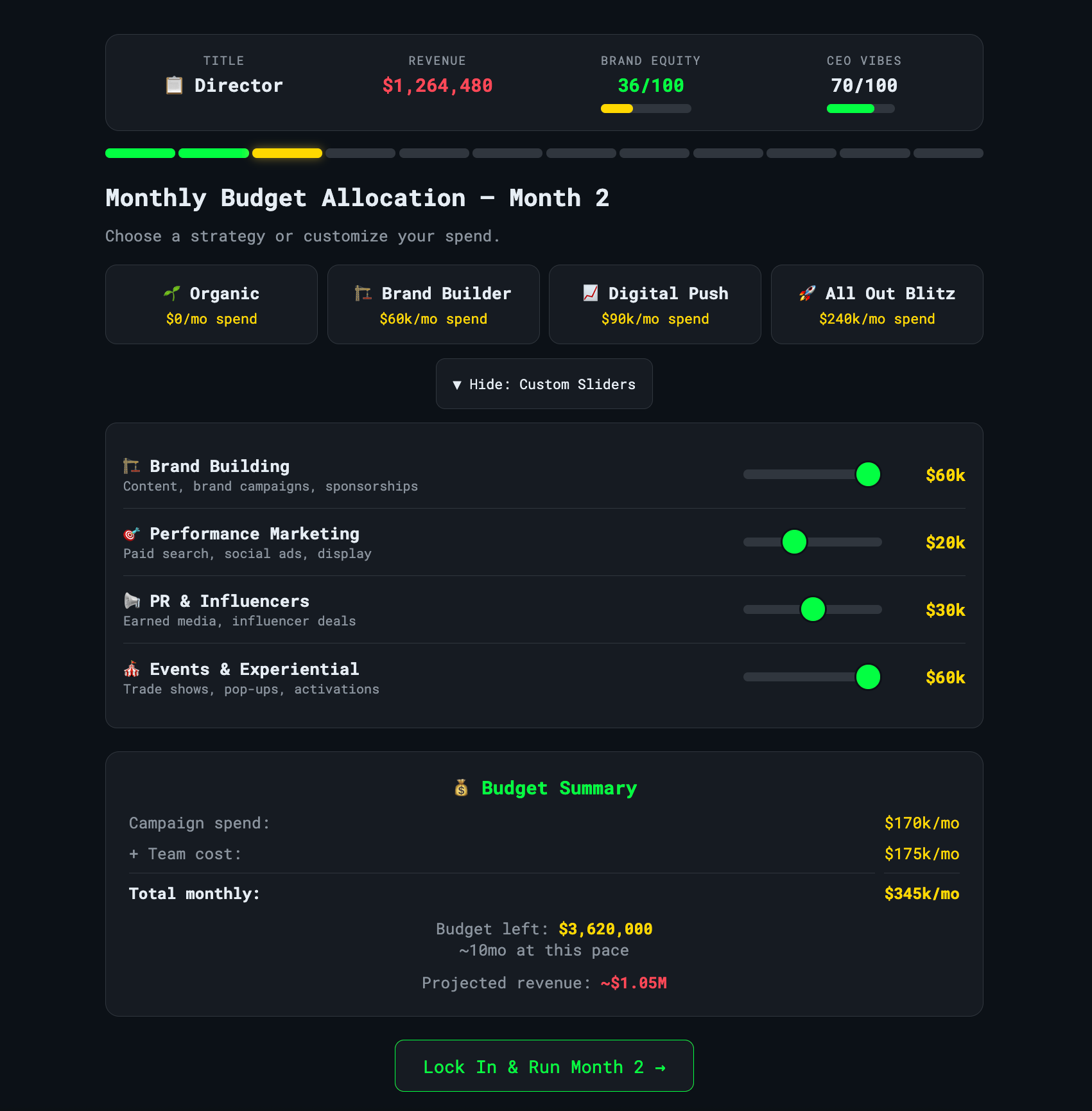
Next, you hire your team and make your pre-launch investments. And every single choice is a trade-off.
Skip PR, and you’ll be caught flat-footed when a crisis hits later in the year. Over-index on data, and you’ll get great insights and better projections—but you’ll have way less money to actually run campaigns.
Then comes the launch itself. You have to decide your strategy: Do you go for a massive, splashy launch to grab immediate market share? Or do you hold back, preserving your budget for a steady drumbeat of campaign spending over the next 11 months?
Over the next 12 months, you face unexpected challenges, respond, and adjust your budget. Every decision has tradeoffs.
The game models the tension between brand and performance marketing.
Brand equity grows like compound interest, it’s invisible early but pays dividends late in the game. Performance marketing is efficient and immediate, but growth is linear and lacks long-term payoffs.
Strategy, Luck, and the Messy Reality of Business
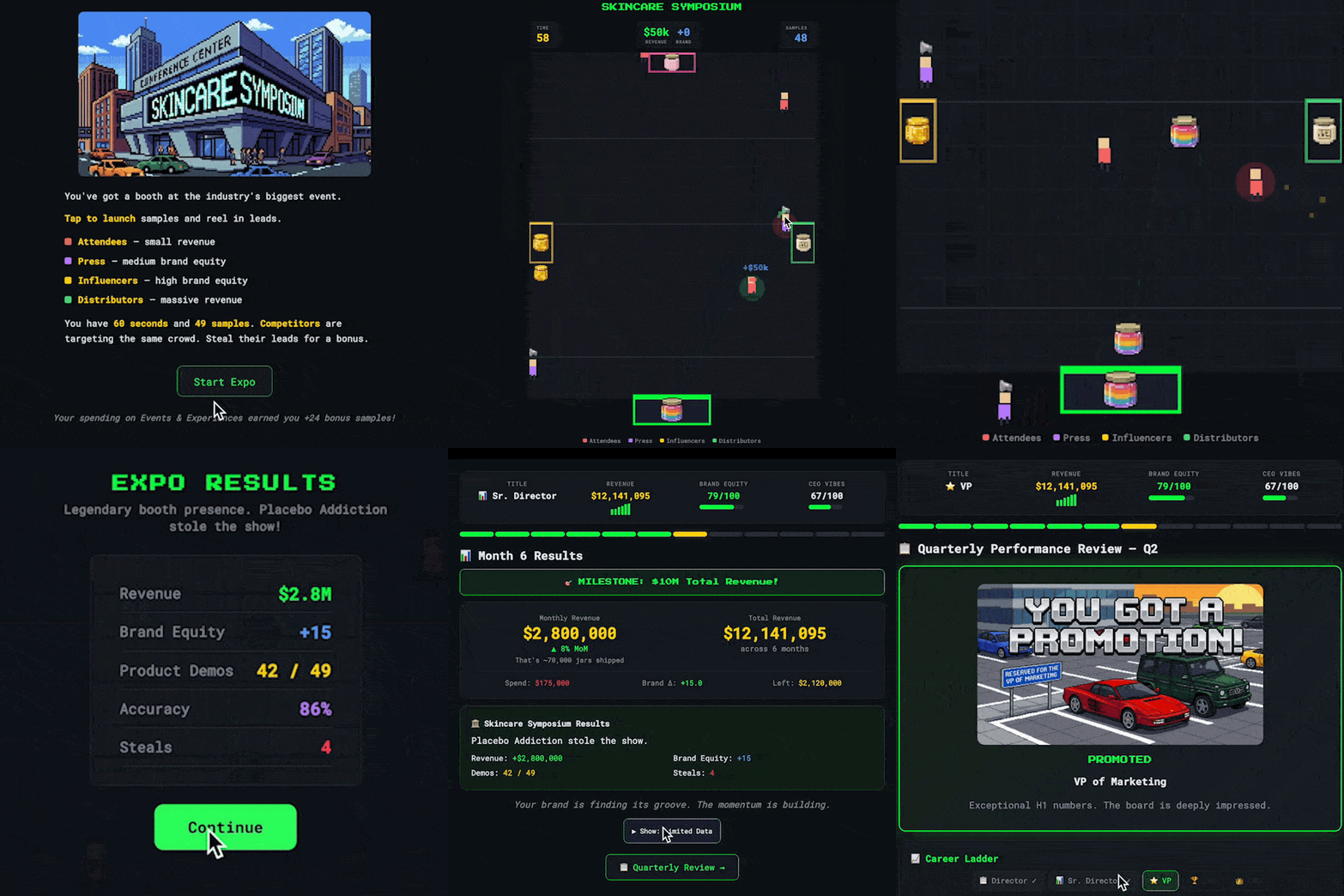
Not everything is in your control. Some months you get lucky. Other times you face a crisis. How you respond matters as much as how you plan.
Premium skincare, value sneakers, and enterprise software all require different approaches. The game rewards players who grasp this, and penalizes those who treat marketing as one-size-fits-all.
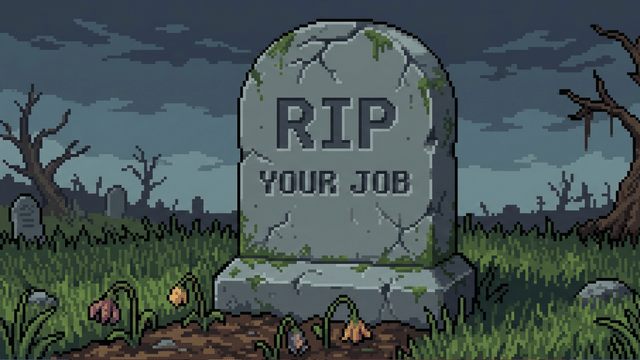
And yes, the CEO can fire you. If revenue stalls, if brand equity craters, if you make too many bad calls in a row... you’ll end up #OpenToWork.
What Marketers Are Saying
I shared early builds of The CMO Game with marketers, professors, and friends who work in gaming.
Elton X. Graham, CMO of Sur La Table, put it well:
“Mitrak’s game sparks the right conversations by not giving you marketing answers, but better questions to ask... which is where real learning starts.”
Brian Marr, a marketing executive and professor, plans to use it in his Advanced Marketing course, describing it as a “great way to break the ice in the first class.”
This is what excites me most: that people might learn timeless marketing principles while having fun playing a game.
Play It and Share It
The CMO Game is 100% free. No login. No email capture. No in-app purchases. Just cmogame.com.
A full playthrough takes 10-20 minutes, depending on how much time you spend considering your strategy.
If you’re happy with your results, you can submit your score to the “Hall of Fame” leaderboard. If you think you can do better, play again with a different strategy.
If you like The CMO Game, the best thing you can do is share it with someone: a colleague, a student, or a friend who’s curious about marketing.
If you’re a professor, you are more than welcome to share the game with your class.
I’d love to hear what you think, and I appreciate feedback on how to improve The CMO Game. Email me at hello [at] marketinghistory.org or find me on LinkedIn.
Thanks!
-Andrew


