

A History of Marketing / Episode 43
If you studied marketing in school, you likely carried Kevin Lane Keller’s work in your backpack.
He co-authored Marketing Management, the all-time best-selling marketing textbook, alongside Philip Kotler. And with Strategic Brand Management, Kevin he defined how a generation of marketers understands brand equity.
As a Professor at Dartmouth’s Tuck School of Business, he has spent decades bridging the gap between rigorous academic theory and elite corporate practice. He’s consulted for giants like Disney, Nike, and Ford, but perhaps his most interesting “field research” came from working with the Australian rock band, The Church.
This conversation is a rare treat for our listeners. Despite his massive impact and the high regard of his peers, Kevin keeps a relatively low profile and seldom sits for deep-dive, long-form interviews. This episode offers unique insights from one of the primary minds to shape modern marketing.
Listen to the podcast: Spotify / Apple Podcasts
In our conversation, we discuss:
The P&G Playbook: How he helped transform Pampers by connecting functional technology to emotional “brand mantras.”
The Art & Science: Why great branding requires both a philosophical “philosophy of consumption” and disciplined data tools.
Managing The Church: What he learned about marketing, fan engagement, and “continuity vs. change” while managing a legendary Australian rock band.
Now, here is my conversation with Kevin Lane Keller.
Thank you to Xiaoying Feng, a Marketing Ph.D. Candidate at Syracuse, who volunteers to review and edit transcripts for accuracy and clarity.
Collaborating with Kotler on “Marketing Management”
Andrew Mitrak: Kevin Lane Keller, welcome to A History of Marketing.
Kevin Lane Keller: Thanks for having me.
Andrew Mitrak: I’m so excited for this conversation because like a lot of people, Marketing Management was my textbook in grad school, and your name was on the cover there right alongside Philip Kotler’s. So, how did you get involved with becoming Philip Kotler’s co-author?
Kevin Lane Keller: It’s interesting. I actually used the textbook too when I got my MBA. I had the third edition, so it’s going back a ways. I think it was the fall of 1978. I have enormous respect and he is a legend, but was a legend back then when I was taking the course. But I had the chance to publish my own textbook on Strategic Brand Management. I had done that and that was really my area of interest, but I’ve always been a marketer at heart in a very broad sense. So the publisher was looking for someone to be a co-author, and because of my experience and some of the things I was interested in, it seemed like a nice fit. So I actually did the 11th edition. Phil and I worked together just to sort of try it out, kind of both sides, and it went well. I enjoyed it a lot. And so I think it made sense and starting with the 12th edition I was formally the co-author and have been a co-author ever since.
Andrew Mitrak: When you write a book like that, that is so widely read and is sort of the Bible for a lot of folks who are just getting into marketing—if a professional marketer reads one book, that’s often the one that they reference—is there a lot of pressure when you write a book like that to make sure it’s accurate and up to date? Do the stakes seem very high for it?
Kevin Lane Keller: It’s daunting. When you think about it, it’s an impossible task because you’re trying to capture all the richness and all the detail and manage to distill that down and package it and write it and source it and reference it and everything, and make it engaging and interesting. So it is difficult. I enjoyed doing that. I think the challenge of that. And you break it down. It’s a little bit like building a house. You think, “Oh my God, building a house.” Well, you’re doing rooms and within rooms there are certain things you have to do. So you really break it down. It is very modular in how to approach it. But the big challenge is really keeping it up to date and making sure that it captures what modern marketing is and, more importantly, maybe what it should be.
The Challenge of Keeping Marketing Texts Relevant
Andrew Mitrak: Yeah, I have a question around keeping it up to date because there are probably certain core principles that you want to keep tried and true. Things like segmentation, targeting, and positioning, I think, were in my version of the book. I’m sure the Four Ps were referenced in it and things like that. But then there are a lot of things that change. So how do you think about what changes versus what doesn’t change?
Kevin Lane Keller: I think there is always continuity and change in marketing in general. I’ve worked with a lot of brands, I’ve worked with a lot of legacy brands, really strong brands, and that’s always the challenge: how do I move forward, but how do I move forward in the right direction and in the right way, at the right pace and all of that. It’s no different with a textbook. You are thinking about what are the new ideas and the new concepts. And sometimes new frameworks and new ways to organize and think about things. But yet at the same time, there are those core principles and segmentation and targeting in some sense, and positioning in some sense. It may change some how you think about those, but that notion and those concepts themselves at least at a high level are ones that are retained. But a lot of things change and especially with digital and with AI, we’re really trying to make sure the book reflects that.
Andrew Mitrak: Yeah, I was thinking just about that example exactly. Like I’m sure SEO is covered in a book, right? It’s a very big thing. But then even the language around it is changing. Sometimes it’s called Answer Engine Optimization with an AI. Sometimes called Generative Engine Optimization, GEO or AEO with AIs. And then it’s sort of just you might just call it LLMs. And the language itself, especially at this moment when we’re recording here in November 2025, is changing so much where if you committed to something in a book very quickly it could be outdated. If that version is used for years, it could just wind up being a thing where you’re like, “Ah, kind of missed the boat on that one.” So how do you sort of think about staying relevant without becoming outdated too much?
Kevin Lane Keller: Well, I think you think about updating more frequently. I think that is probably one of the answers because there is nothing you can do. You can only go and be as current as you can till literally the moment of publication. So you’re always having the final proofs and you’re looking at them and you’re literally making changes and edits to try to make sure everything is as up to date as possible at that point in time. But at that point in time, then you move on in some sense. It is a little more dynamic with publishing. You have more opportunities to do updates and bring that in. So that’s the advantage of the e-text and the more digital versions versus the hard copy, the kind of classic textbook version in that sense. But you are always trying to. And look, the AI, that is an area that is just exploding so much and changing so much that it’s going to be a moving target for a while.
Andrew Mitrak: Oh yeah, keeps it interesting.
Kevin Lane Keller: Yeah, it does. Yes.
Collaborating with a Marketing Legend
Andrew Mitrak: So what was it like collaborating with Phil Kotler?
Kevin Lane Keller: I had known him some through the years. He had actually tried to recruit me as a PhD student to Kellogg at one point in time, wrote a very nice letter when I was just first getting my PhD and through the years. He’s one of these guys. I joked when they had at one point an event to kind of honor Phil at Kellogg at Northwestern, and I joked that there had to be like three Philip Kotlers and we only actually had one of them in the room and the others were busy doing all the other things that Phil Kotler does because he’s just remarkably productive. I mean, unbelievably so. And the way he gets things done. But he’s the nicest guy. His ability, his radar to pick up on what matters. His ability to synthesize that, clarify it, put it into context. It’s just amazing. So for me, I’ve learned so much, which is great. But I’ve also enjoyed it so much. So he’s made it fun. So it’s just been great. And he’s still heavily involved with the book. So he definitely is still providing a lot of input, a lot of feedback. So he’s definitely part of the book still.
Andrew Mitrak: That’s amazing. Even into his mid-nineties. I think because he was the first interview on this podcast and he had a similar experience where he would just respond to emails so quickly and kind of be on top of things so fast. It’s amazing that he’s able to do it all.
Kevin Lane Keller: Well, there are three Philip Kotlers. I’m convinced. But maybe if it’s just one, it’s even more extraordinary. I’d be amazed even with three.
Andrew Mitrak: When you first started collaborating, him having this Father of Modern Marketing type legendary status in the field, were there ever any disagreements you had with him? Or did you feel like you could push back or evolve things? Or did you feel like because of that, his status, you had to be deferential to him and also he was sort of the original author? What was that dynamic like?
Kevin Lane Keller: That’s a good question because that’s a big issue. A lot of times it’s just people, you know, we all have that issue. We’re kind of territorial or we just sort of kind of want to stick with what we’ve done and for whatever reason. And he’s been always really flexible and open-minded about that. So that has just not been an issue, which has been great. I think there are certain topics he’s reluctant to give up in the book that sometimes, maybe they’re not as important now as they once were. They’re still important, and I get the reasoning, but that’s the one area is just sort of in that space where it’s just always harder. It’s easier to add than subtract. That’s always the hardest thing is subtracting. And you need to do both. That’s the challenge. Is what do you not include when you’ve included it before? And maybe there’s a reason to still include it, but if you do that for too much, then the book gets too long.
From Ad Retrieval Cues to Brand Equity
Andrew Mitrak: Yeah, that makes sense. So along with marketing management, you’re best known probably for your contributions to brand. And one of your early papers in 1987 I think, was “Memory Factors in Advertising: The Effect of Advertising Retrieval Cues on Brand Evaluations.” And so you were kind of early in working on brand and sort of connecting advertising, memory, around brand. So what led you to researching this area of advertising, memory and brand?
Kevin Lane Keller: That paper was my thesis paper. And that came out of my co-chair was Jim Bettman from Duke University. He wrote a paper on memory factors in advertising that had an example about Life Cereal and Mikey. It was a very popular ad, but people could not remember the name of the cereal so they weren’t getting the impact from that because the ad was working but not branding well. People liked it but didn’t connect. So they put a little picture of Mikey on the front of the package, framed it with a television set, and said “Try the cereal Mikey likes.” So I called those “ad retrieval cues.” And so I studied those. It made a lot of sense to me because it’s trying to make those connections that memory just aren’t strong enough in memory. You’re helping people out in retrieval.
But back door that got me into branding because the question was, “What did Life Cereal stand for without the cue and how did it tap into or remind people of the ads?” So I did a whole lot about memory and advertising and everything. But that’s how I got into branding. And then my most famous paper was in 1993, which was a paper I wrote about Customer-Based Brand Equity. And it’s a paper, 30,000 or some whatever Google Scholar cites. And it’s taught in seminars to this day. And I’ve written a couple follow-ups on that. I’ve written a ton in branding. But even on that specific paper, I’ve revisited it in some instances. But that’s really kind of... it all came down to understanding how brands work for people and especially in their memory and their knowledge and what they learn and how advertising affected that, but then how everything... how just brand in general operated.
The Explosion of Brand Equity in the 1990s
Andrew Mitrak: So it seems like in the late eighties to early nineties, brand was sort of the right topic at the right time. This is just as the idea of brand equity was really gaining traction. Can you talk about that transition that was happening with brand in the era? What was it before and then what was changing at this time?
Kevin Lane Keller: Yeah, I mean it was one of those things where it really came out of what was happening in the eighties—all the mergers, acquisitions. People were having to value, so the intangible value of brands. So people were starting to recognize that. Brands obviously mattered to the CPG, the packaged goods companies, the more traditional consumer products. But all of a sudden a lot of different people, services and different organizations were all starting to realize in different forms that their brands really mattered. And so it was an exciting time because all of a sudden people were thinking differently about their marketing and literally what they did. And so to be sort of at the front end of that, which I was with some others, and to be able to talk about it and work with companies and help them understand that, you know, was just a really exciting thing to do. So it really, really took off. And when I published my book in even ‘98, there was just so much interest. And so the book sold a lot in trade even though it was a textbook because people at that time, there weren’t that many branding books.
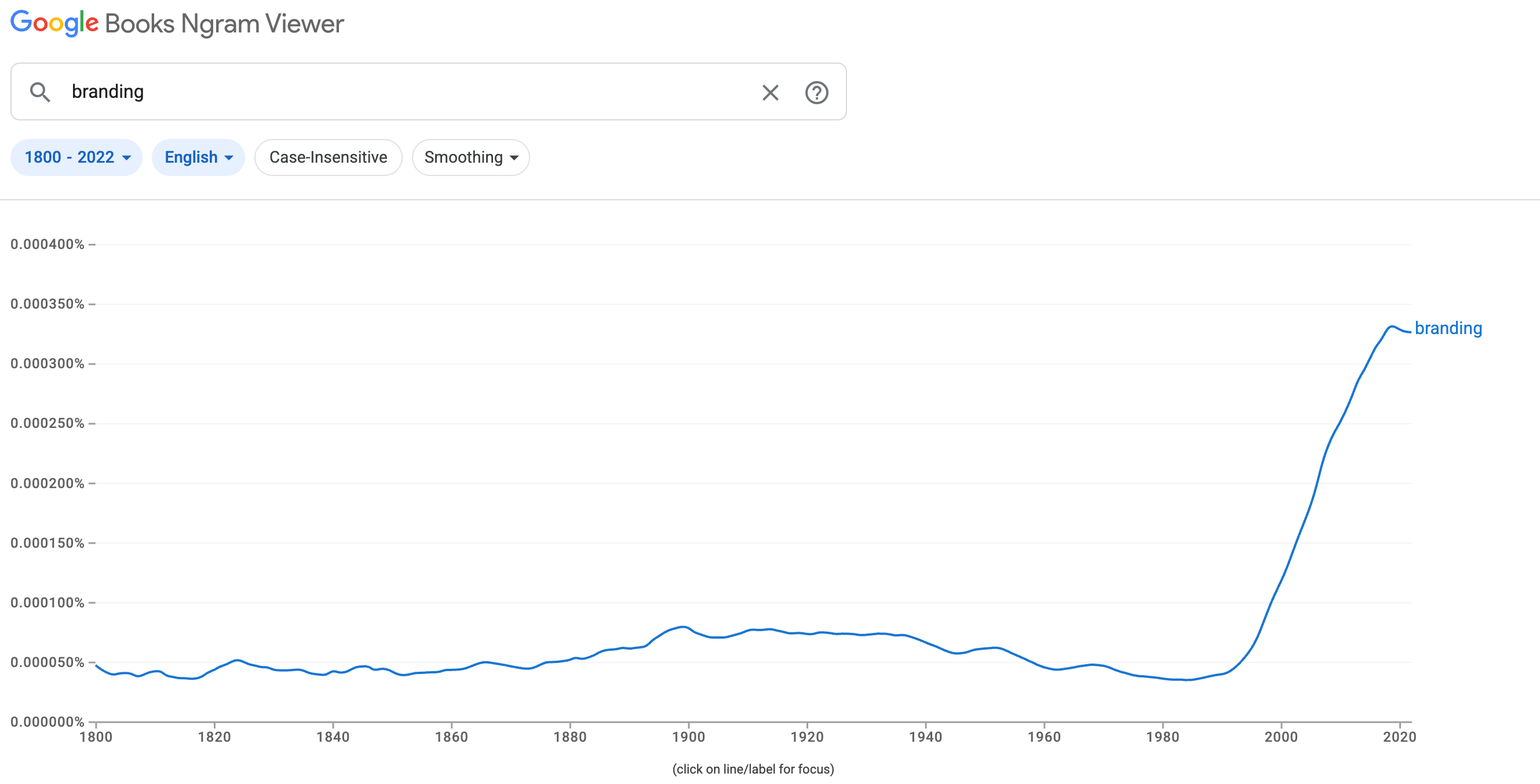
Andrew Mitrak: If you look at a Google Ngram of the mentions of the word brand, it really explodes in the early nineties or so. And that brand equity just led it to be a more elevated word within marketing and business in general. Did you see that wave coming and place yourself there because it was the most interesting topic area? Or did you feel like you were just interested in it independently and it happened to coincide with this? Were you thinking like, “Oh this is a big wave that’s coming, I want to be at the forefront of that”?
Kevin Lane Keller: A little bit of both. I was fascinated by the topic. I thought it was really interesting and important. And I certainly recognized that others were feeling the same way. Interestingly, and eventually it, where we are today, it’s like part of everyday vernacular. I mean everyone talks about brands now. That was not the case 40 years ago or even 30 years ago or 20. So it took a while for that diffusion. And there are still some industries that are a little still maybe not embracing brand as much as you might think. But it was a realization that this is something that’s really important. It hasn’t been studied much. It needs academic study. It needs rigorous research.
Comparing Brand Equity Models
Andrew Mitrak: I interviewed David Aaker twice for this podcast actually, and we talked a lot about this era of brand equity and his work in this area. Did you work with him at all?
Kevin Lane Keller: So Dave, I met Dave in 1985 actually when I was interviewing for my first job. And he was at Berkeley and on the faculty there. And that’s where I joined the faculty. And at the time Dave had been doing a lot... he was known more as a quantitative sort of marketing person, but he had been starting to move into strategy. I was somebody who had been studying advertising and, as I was saying, in consumer psychology and memory, moving into branding. And so it was a natural thing for us to work together. So he, some of his first papers, some of my first papers in branding were together. And they were on brand extensions. So which was at the time a big area. There were a lot of brand extensions that were happening and sort of but there hadn’t been much research. So we were developing models and running experiments and things like that. So we worked together for a good almost five years or so. And then we sort of went slightly different directions because he started working on trade books and going to a more practitioner audience. And I was at Stanford, you know, in the process of getting tenure and publishing research and writing a textbook. So I went a little bit more the academic route, although, you know, there’s obviously a lot of overlap between what we did.
Andrew Mitrak: That explains sort of your different models a little bit because I don’t want to frame it as competitive per se, but it seems like you’re both people in the field of brand who are introducing your Customer-Based Brand Equity model. He has his brand equity models. And I could see if I’m a marketer at the time wanting to learn about brand equity, I’m like, “Huh, which model do I use?” Was there ever sort of a competition for mind share among both of you in your models? Or what was that dynamic like?
Kevin Lane Keller: Well, I think they’re complementary in some ways. I mean Dave’s is much more of a strategy... it’s a little bit more asset-based in some ways. And mine is much more rooted in consumer and consumer behavior, consumer psychology and all of that, and to develop certain strategic principles that come out of that. But a lot of our recommendations are the same. Even though because some of his assets are ones that are consumer behavior related and my consumer behavior, I make sure I drive that into more outcomes and other things that capture sort of more financial and asset sort of based things. So there is overlap in that sense. So there really wasn’t... I see them as complementary in a lot of different ways.
Constructing the Brand Resonance Pyramid
Andrew Mitrak: Totally, absolutely. Can you walk through... as you created this Customer-Based Brand Equity model in 1993, what is the approach to building a model? I’ve never built a model before. And it seems like a model you have to be sort of broad enough to encompass a lot of things and a lot of different industries, but also specific enough that it’s really meaningful and actionable and all of that. And of course grounded in reality and actual behavior. So what is the approach... where do you start with a model?
Kevin Lane Keller: You know, it’s funny. The model that I’m probably most well known for, there’s the Customer-Based Brand Equity sort of definition and concept. And then the actual framework is the Brand Resonance framework. And that’s one where it is very much the sort of looking at how to build a brand and thinking about the stages people go through in their development. But I think that that’s one where I really, I literally sat in the back of a room and tried to lay out sort of the questions that people would ask about a brand and sort of just really tried to be as comprehensive as I could be, but then as concise and cohesive I could be as part of that. And so I think that was really the key was to do that.
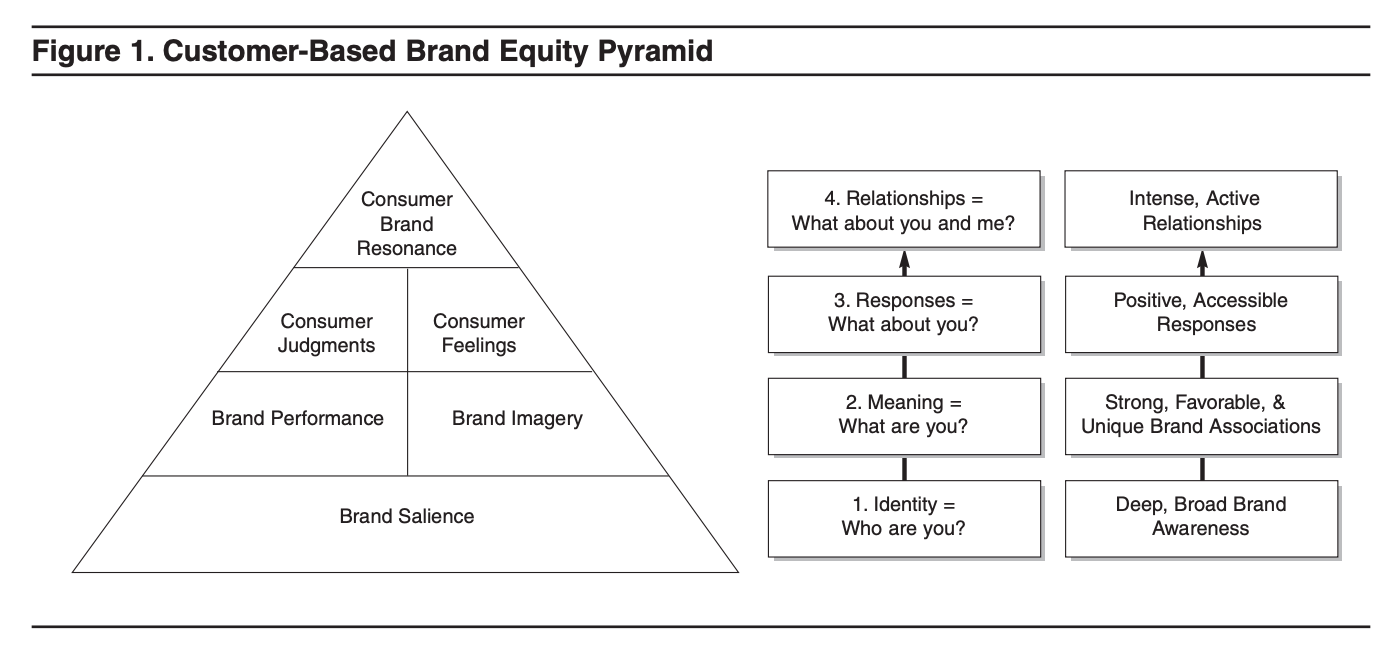
Andrew Mitrak: What I like about this is that this pyramid has very plain spoken language. It’s: Who are you (brand identity), What are you (brand meaning), What about you and what do I feel about you, and that’s brand response, right? And then What about you and what kind of association and how much of a connection would I like to have with you, and that’s brand relationships. And sort of it’s very a natural flow of like, “Hey, I need to understand this one to kind of understand the next one.” And was building it in sort of a plain spoken way where it’s kind of simple and logical, was that sort of part of your idea behind... or was that part of your approach to making it?
Kevin Lane Keller: Definitely. And I mean the goal with that, like I said, was to be comprehensive but also to be as clear and logical. And I was trying to capture everything that I knew about marketing and consumer behavior and how brands are built. You know, so there’s an awareness and image component which are fundamental to brand associations, fundamental to any model, including Dave Aaker’s model, my model, etc. So had that and then the judgments and feelings, the head and the heart. And then resonance where you actually the customer feels in sync with the brand. They really feel a connection. So deep, you know, sort of intense active loyalty relationships. But each level of that pyramid had a wrinkle that like salience at the bottom was about breadth and depth of awareness. It’s like how easily is my brand thought of and how often? Is it in all the right times and places and ways? And points of parity, points of difference the next level up, which is my positioning model that I developed with Brian Sternthal and Alice Tybout at Northwestern. A different way of thinking about how those that brand image level. So I tried to make sure it was comprehensive, covered the key concepts, but also was original in certain ways that I thought were important to kind of bring in.
Andrew Mitrak: That’s right. Yeah. It seems like a model also has to be original enough to merit a new model, right? While also not being so radical that it’s you have to throw everything else out, right? You have to kind of build on what’s already there. So kind of meet people where they are with their existing marketing activities and but also offer something new that’s actionable for them.
Kevin Lane Keller: That’s right.
Applied Branding: Transforming Procter & Gamble
Andrew Mitrak: Let’s talk about putting this into practice because you’ve consulted with a lot of really amazing brands: Accenture, Disney, Ford, Intel, Levi, Nike, many more, the list goes on. And are there any case studies from your career that you’re able to share about where you took this model and helped a brand implement it and had sort of real world outcomes?
Kevin Lane Keller: So the ones, I mean like I said, I’ve had the chance to work with an awful lot of the top companies and multiple engagements, you know, which has been great. And the one relationship I had that I think was one of the more productive was with P&G, so Procter & Gamble. And it was in the kind of the 2000s and Jim Stengel was their CMO. Brilliant guy, wonderful guy and very sharp. But he really wanted to upgrade the marketing there. And so it was a nice relationship because I worked with some of their thought leaders in improving their toolkits when it came to positioning. This resonance model I described became their tracking tool. It was called “Equity Scan” and they used that to measure the strength of their brands and their development of their brands around the world. So they operationalized this in a survey form. I helped them with brand architecture, like how to think of whether it was Crest or whatever brand where you’ve got this complex portfolio and sub-brands and extensions and how to think about architecture for growth. And it was just across the board. It was just a lot of fun. It really made I think a difference for them because it really helped to get them thinking in a rigorous, relevant way in many ways they’d done before, but it was as we were saying before, kind of bringing in some original thinking to put on top of that layer.
Andrew Mitrak: Procter & Gamble, this amazing, iconic brand, the originators of a lot of the original thinking about branding back in the 1930s, really long legacy of brand, but they have this big portfolio of brands that they offer. So were there any specific examples of where you applied your model or worked with them within their portfolio of brands?
Kevin Lane Keller: I had a chance to work with a couple different brands, but the one that was probably my favorite was Pampers. It was a really successful brand and they had a great team, so they were obviously doing really, really well. But they sort of embraced some of the thinking that’s reflected in the positioning model and the resonance model: the duality of a brand and especially the emotional and functional components and how to connect them. So coming up with a brand mantra, “caring for baby’s development,” which really took the functional benefit of dryness and absorbency and the fact that the baby sleeps better and feels better, but then learns and plays and develops. And so really made that connection functionally and emotionally, which is exactly what the model that I have talked about. And so we workshopped that some and got to a really good spot and business really took off. And all credit to the team because they had built this thinking and structure in place that allowed it to kind of go that next level. But it was just a great, for me, a personal experience where applying some of these models and working with a team and just seeing the outcomes in such a demonstrative way for their biggest and most successful brand to take that to the next level was quite a thrill.
Andrew Mitrak: I love it. I’m kind of smiling here because the brands that you have referenced, I have three daughters and I have one who’s six months old, one who’s three years old, and one who’s five years old. And the five-year-old is obsessed with Life Cereal, and you were talking about Life Cereal. That’s her favorite breakfast by far. And then yeah, we have Pampers in our house for the six-month-old. And it is, you’re right, it is actually amazing technology behind diapers as well, how they work. But also that I don’t necessarily buy diapers because of the technology per se. I look at price and a lot of things, but also Pampers, you just sort of trust it. If you see that on a shelf versus sort of a store brand or something, you’re like, “Oh gosh, is that going to cause an itch? Is that going to be worth it?” And it’s like, let’s just stick with what we know.
Kevin Lane Keller: Right. Yeah, no, exactly. Exactly. And it’s a great functional benefit, but there’s an emotional payoff that you always want to make sure people are aware of because it matters so much to their lives.
Bridging Academia and Practice via the Marketing Science Institute
Andrew Mitrak: So you also worked with the Marketing Science Institute for years. Bill Moult was a previous guest on this podcast as well, and he sung your praises as far as your contributions to the Marketing Science Institute. So can you talk about MSI and where an institution like that sort of fits into your work on brand?
Kevin Lane Keller: So they were really instrumental in so many ways. So I won the doctoral dissertation proposal competition in 1984, and I was just starting to work on my thesis and I wrote something up, submitted it, and I was one of the first two co-winners. And that was really important for me because I still wasn’t sure what direction to go. I had a math-economics background. So they helped point me in the right direction—as it turns out, the right direction. I got great validation. And then all the branding work, they were very supportive and gave that gave me a platform to work with others, to share my ideas. So they were a real catalyst for that for me and for the field of marketing. And then I got more involved after that. I became a trustee, eventually an Executive Director on the board for a long time. And it’s just a great concept. The organization is a great concept because it’s that bridge between academia and industry practice and bringing together thoughtful practitioners and practical-minded academics to talk about the most important problems and the most interesting and challenging decisions. So it’s just a great concept and great organization.
Andrew Mitrak: Yeah, for sure. It seems like we need more of that connection between academia and practitioner because it is a gap I’ve noticed on this podcast even when speaking to both people on the academic side and then folks on the practitioner side. There is a gap there, so we need folks to work on closing it.
The Art and Science of Branding
Andrew Mitrak: I want to ask about the phrase “Marketing Science” and how it relates to brand. Because I think, speaking broadly, when I’m at a company, the brand folks are a little more of the art folks. There’s a little more of a general sense that brand is something that’s intangible, a little more difficult to measure. You think of brand and creative as sort of going hand in hand. And then what I think of like the data scientists I work with, often they’re measuring individual channels or they’re doing ROAS, or they’re doing ROI of specific campaigns. And that’s a little more the science element. I guess, do you kind of agree that that characterization sort of broadly exists? Or do you have any thoughts about that?
Kevin Lane Keller: Well, I think there is some truth to that. One, it doesn’t have to be that way, and two, it shouldn’t be that way. And so I actually think it’s an art and a science. I think marketing, branding, anything. And I think the more you bring those together and celebrate those, appreciate that, and either do it in a holistic way across an organization, but even within individuals and those who are able to bridge that. But I think it’s really important. And I worry on the branding side, I don’t want it to be seen and licensed to be artistic and not feel that you need to have the rigor and discipline and other things to really make sure that you’re thinking things through in the right way, even while being creative, that you’re still mindful of other kinds of things.
So I always talk about having, when I talk about art and science, part of the art is having a philosophy of how branding works. So there’s creativity, but it’s like, how does it work? Because you’ve got to somehow, no matter what you do. And so having that philosophy. So I tell my students that’s the key to me for the art and science is: what is your philosophy? What assumptions do you make about consumers, about competition, about brands? How they work, how they don’t work, all that. And you build those over time. I’ve got certain philosophies. You grow brands through little steps. I have certain tenants that I have just learned through experience and research and etc. So that combined with the tools that you can apply, like the resonance model and whatever that might be, but you need the blend of those because just having the tools is not enough. Just having the philosophy is not enough. You need to have the two of them.
Andrew Mitrak: I’m going to take the bait. What are some of the tenants that you’ve learned? Or what are sort of the core things that you’ve learned personally that just seem to kind of apply across the board?
Kevin Lane Keller: I mean, just at the heart of a great brand is a great product. I mean, that’s one of the ones I fundamentally believe in. But not everyone does. I mean, there are people who really don’t think it matters as much and what have you. And so, that said, every brand contact matters, you know, because it all affects knowledge. It affects what people think and feel and learn. So you sort of develop these tenants of that kind. And balancing continuity and change, and innovation and relevance. Making sure you have innovation so you’re always moving forward at the right pace and in the right direction and in the right way, things we talked about earlier. So you kind of develop these and then they inform how you apply your tools.
Andrew Mitrak: Yeah, for sure. No, I think that’s a totally true tenant and it’s something I’ve actually thought about in marketing in general is that who are the greatest marketers of all time? They’re the people who work on the best products. If you kind of think of the Steve Jobs of the world or the Disney or the folks who have kind of changed marketing itself, there’s always a really great product behind it. And if there’s a great marketer and you can have a brilliant campaign, but if the product’s not there, you’re kind of going to forget about it and it’s not really going to have the mark it has. So part of it is having taste and choosing the right products to market as a marketer.
Kevin Lane Keller: Well, but also product is part of marketing. And that’s really important. When you think of the 4 Ps, everything about that. So all the marketing should inform and work with R&D and everyone else to design the product to satisfy customer needs and wants in better ways and all that. So that’s why I mean it’s just making sure you don’t take the product as a given and not constantly thinking, especially now where you’ve got these platform brands. Brands and products are platforms. And so the product is one part of that. So you got to really think about how you’re enriching it in different ways with services and information and whatever else you can experience, other things you can do.
Rock and Roll Marketing: Kevin Lane Keller & “The Church”
Andrew Mitrak: Changing gears here, you manage a band called The Church. They’re one of the biggest bands that’s ever come out of Australia. And it seems like such a surprising thing. I’m just wondering, how did you come to manage The Church?
Kevin Lane Keller: Well, “manage” is a little maybe overstated. I have to be careful with that. I’ve definitely helped manage them, so at different times. Less so now for sure. So I’ve been executive producer for them for a number of albums. And what happened, it was just a fortunate coincidence in 1998 where I happened to see them in San Francisco, in Melbourne, Australia, and then over in London. And it was just, as luck would have it, and some other things. And I kind of realized as great as the band was, the music business is incredibly unforgiving and they just needed help of various kinds. And some of it was financial. So I was a little bit of a patron of the arts, if you will. And this is before all the different ways now exist online where bands can do different things to try to support themselves. That didn’t exist back then. So really kind of stepped up and then also got involved in trying to help them financially and beyond financially—business-wise, career-wise, etc. Incredible band, very talented. I’ve learned a lot about the music business in the process. And it is a tough business. There’s just no question about that. A very, very challenging business. But it’s been hugely enjoyable and it was just pure luck that I kind of fell into this and then played this, took this role at that time.
Andrew Mitrak: Did you have any background in the music industry? Or was this kind of bringing some of your brand and marketing consulting to the table? What was it that sort of set you up to be able to help them out?
Kevin Lane Keller: Well, my background was hundreds and hundreds of albums and records and CDs and cassettes and everything. And I was just a huge rock and roll fan. I was, it was 1967, “Summer of Love,” I was 11 years old listening to a transistor radio. So I just always loved music and I loved the 80s music. I loved a lot of different decades and genres. But I especially loved The Church. I just thought they were an incredible band and were always special to me. And I always thought that they were a band I did not want to see go away for any reason. And so that’s why I stepped in. But I followed it some. If you’re interested in marketing, interested in business, interested in music, you can’t help but be thinking about—I’m the same way with movies—just all aspects of the marketing and business side of that. So I certainly had that armchair view, but I never actually worked with anybody before.
Andrew Mitrak: You mentioned movies. There was a, I think when I first heard them, there’s a movie called Donnie Darko that came out where the soundtrack was very popular. It had 80s songs and I think it had “Under the Milky Way“ on it. And I think that’s probably the first time I ever heard The Church. Were you involved with any of their placement on movie soundtracks or any of that?
Kevin Lane Keller: Not as much as I would have liked because that was something we always strived for. And it happened some, but we just weren’t, we didn’t have our act together enough. We weren’t organized enough at that time. It was a pretty grassroots effort. And so we were relying a lot on just the sheer talent and love and respect that people had for the band, and the brand I guess, if you will, to sort of move it into different arenas, which happened. There was one ad, it was a famous ad for Volkswagen “Drivers Wanted” going back in the day where it was literally supposed to have “Under the Milky Way,” which is one of their famous, most famous songs from their most famous album, Starfish. And at the last minute, somebody subbed in, and the person loved The Church, but subbed in a Nick Drake, who is an English folk singer, a song, I think it was “Pink Moon“ or whatever it was, into the ad instead. And it was just very disappointing because it would have been, it had got a lot of exposure, a lot of attention. It would have been a nice little nudge if you will. But that’s the way it works in this business.
Andrew Mitrak: It’s a missed opportunity. But at least they were replaced with Nick Drake, who’s pretty great and not some just kind of schlocky song.
Kevin Lane Keller: It was hard to complain for that very reason, but it still stung a little bit.
Marketing Lessons from the Music Industry
Andrew Mitrak: So did your expertise in marketing and brand, what did you bring from that to a rock band? I am sure a lot of things were brought in. Were there any specific things or surprising things that you were able to apply to working with The Church?
Kevin Lane Keller: It’s funny. It’s one of the things I see with other, even with companies. There are times they make things harder than they need to be. It’s always hard enough as it is, so the last thing you want to do is make it harder than it needs to be. And with bands, it’s a little bit of, just as an example, your setlist when you tour. Touring is important. But like what songs do you play? And you got to, there are a set of songs people want to hear. You may feel like you played them enough. You may feel like you’re kind of tired of them. Doesn’t matter. And it’s funny, the band went through a period, The Church, where they did kind of have that hit a wall with some of those songs. Didn’t really want to play them. But they’ve gotten past that now and I’m so happy for them. They really appreciate how much that means to people and they put their heart and soul into it and they put on these great shows with a balance of the old and the new. It’s back to what we talked about: that continuity/change. But you got to make sure you balance that. And that’s again a lesson I see for a lot of companies. Don’t make it harder. Don’t make it more difficult, you know.
Andrew Mitrak: They want to rebrand, have a new slogan, do some new messaging where it’s like, well, you’re seeing it all the time because you’re a marketer at the company, but your audience, they don’t see it as frequently as you do. So maybe stick with the campaign that works a little longer.
Kevin Lane Keller: Yeah, or just when you’re thinking of decisions, you’re just talking yourself into all these different things where, look, there’s just a lot of times just focus on what matters in different ways. And I think to be honest, that’s where the tools and the frameworks, because a lot of times the compliment I love from companies is when they say that you make it so simple. “You do it, it’s been great working with you, you just made it so simple for us.” And I’m always thinking, well, sometimes you’re making it so hard. I’m just providing structure and clarity and just trying to get them to see and then be able to make the decisions in the right way.
Andrew Mitrak: So did managing The Church or working with The Church teach you anything about marketing? Or were there any things you learned that you were able to kind of apply the other direction towards your work?
Kevin Lane Keller: I mean the one thing, music has always had a community and a fan base and everything. And obviously brands have embraced that in a much bigger way. But this was something that music was way ahead of in some sense. And connecting with them and letting them be the advocates, if you will, which has been so helpful for the band. So they benefit from the again, the love and support of their most devoted fans. So I think that’s definitely a lesson and just in general about how finding ways, it’s about engagement and the right ways to develop that and cultivate that. But recognize that not everybody’s engaged and so you’ve got a more casual fan base and they’re really important too. So that’s kind of one of the real lessons I got early on that was really helpful was just learning about that.
What Remains Constant in Marketing
Andrew Mitrak: Wrapping up, we were talking at the start about Marketing Management, all the updates that need to happen and AI and all these things that are changing in tech and in digital and in marketing. But I’m also curious, what are the things that aren’t changing? Are there any things that have stayed consistent and will continue to stay consistent for decades in the future?
Kevin Lane Keller: Yeah, I mean we talked before about segmentation, targeting, positioning. I think just the general strategy notion. I think the ways you execute and implement that obviously change. I think Integrated Communications. I think Omnichannel, integrated channels. The mixing and matching of how you go to market, both in what you say and where you sell kind of, or how you sell. It’s at that high level, but then there’s so many unique things that are changing underneath that about how you actually execute that, how you implement that, even how you plan a lot of that. So I think that’s where you see so many differences I think. But I think there’s some of those kinds of high level areas of marketing and tasks that have to be done that I think that are still sort of relevant today.
Recommended Resources
Andrew Mitrak: Kevin Lane Keller, I’ve really enjoyed this conversation. For listeners who’ve also enjoyed it and they want to dive into more of your work, where would you point them?
Kevin Lane Keller: So I’ve got lots of articles and a lot of research that I published, but I’d have to go with my textbook. And I wrote it as sort of being and wanted it to be seen as sort of the Bible of branding, this authority. And it’s now co-authored with Vanitha Swaminathan who helped me out on the book. But I think that’s the one. It’s written to have the rigor and the relevance, to be comprehensive, lots of examples. It’s not too dense or too academic, I don’t think, in the treatment of the subject. And so I think that’s one. It is daunting because of length and all that kind of goes with that. But that would be the place I’d go for those who are interested in really diving into again, those more thoughtful practitioners who want to kind of get into different frameworks, different ideas, different concepts, different research advances, whatever. That’s captured in the book. But I think it’s packaged in as user-friendly way as I can. So that’s probably where I’d send people.
Andrew Mitrak: And this is your textbook, Strategic Brand Management, which is now in its fifth edition?
Kevin Lane Keller: That’s right. That’s right. And again, for those interested in marketing management more generally, just want to know the fundamentals, I’d go back to the Kotler book that has been around for decades and still I think is a really useful resource for what’s going on in marketing and how to think about different topics and providing structure and insight and all of those kinds of things.
Andrew Mitrak: Yeah, for sure. If you’re listening to this podcast and you made it this far, pick up a copy of Marketing Management as well and just keep it as a reference because it’s just, it’s worth just having just because even if you’re already familiar, it’s something that a lot of other people will have learned. So it’s worth just having as a reference guide. So Marketing Management and Strategic Brand Management. And Kevin Lane Keller, thanks so much for your time. I really enjoyed this conversation. I had a lot of fun. And so yeah, thank you.
Kevin Lane Keller: No, thank you. I enjoyed the opportunity to talk with you and good luck. I think it’s a great series that you have and looking forward to seeing who else you have on next.


